
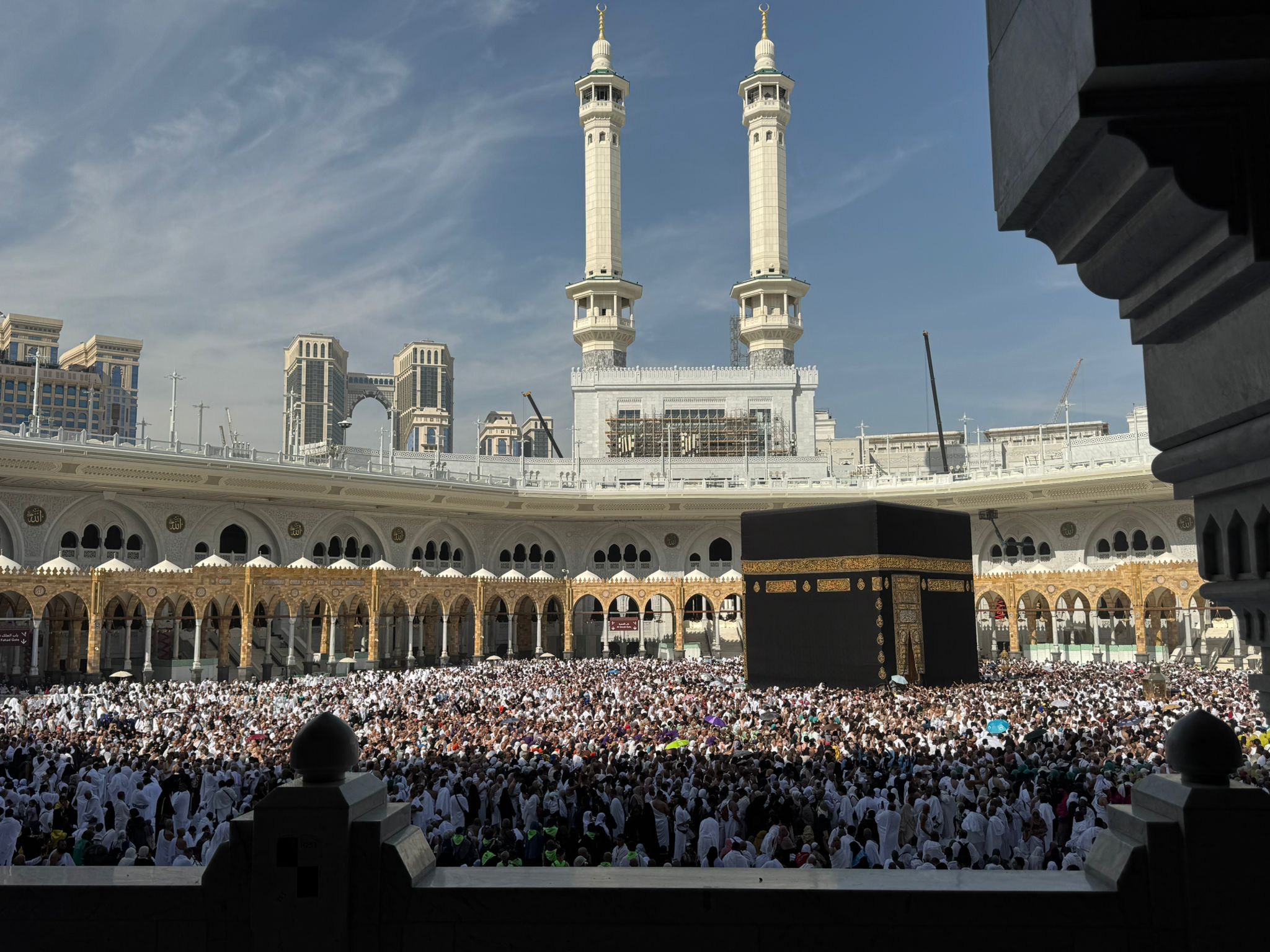
A Simple, Practical Guide to Performing ʿUmrah
Umrah is a highly rewarded act of worship performed by entering the state of ihram, completing tawaf around the Kaʿbah, praying two rakʿahs, performing saʿi between Safa and Marwah, and finally trimming or shaving the hair.
This guide is written to be practical, simple to follow, and based on mainstream Sunni fiqh.
The pillars and obligations of Umrah
Pillars (arkan):
• Ihram
• Tawaf
• Saʿi
• Hair removal (tahallul)
Obligations (wajibat):
• Entering ihram at the miqat
• Respecting ihram restrictions throughout
If a pillar is missed, the Umrah is invalid.
If an obligation is missed, a sacrifice (dam) is required.
Preparing for Umrah
Perform ghusl if possible. Trim nails and remove unwanted hair.
Men may apply perfume before entering ihram but not afterwards.
Wear loose, clean clothing until reaching the miqat.
What ihram means
Ihram is not the clothes. It is a sacred state of obedience, symbolised by simple clothing and restrictions intended to increase humility and spirituality.
Ihram for men
Men wear two unstitched white cloths:
• izar (lower cloth) wrapped around the waist
• ridaʾ (upper cloth) draped over the body
Nothing tailored to fit the body may be worn.
Footwear must not cover the ankles or a large part of the top of the foot.
A belt, clips or a money pouch is allowed.
Prohibited for men in ihram:
• Wearing stitched/tailored clothing
• Covering the head with hats, scarves etc.
• Perfume after entering ihram
• Cutting nails or hair
• Hunting
• Intimacy with spouse
Permissible for men:
• Umbrellas, roofs, and shade
• Sunglasses
• Blankets while sleeping (head must remain uncovered)
• Changing ihram cloths
Ihram for women
Women wear their normal modest clothing. No face covering and no gloves in ihram.
They may wear shoes freely.
Women must follow the same restrictions as men:
• No perfume after ihram
• No cutting hair or nails
• No intimacy
• No hunting
Menstruation rulings
A woman can enter ihram while menstruating.
She may recite talbiyah, dhikr, duʿa, and Qur’an (according to many scholars).
However, she cannot perform tawaf until she becomes pure.
If menstruation begins:
• Before ihram, enter ihram normally at the miqat
• After ihram but before tawaf, wait until purity
• During tawaf, stop, leave the mosque, wait for purity, then restart from the beginning
• During saʿi – saʿi does not require purity, so it may continue
If a woman cannot delay her flight home, scholars allow a structured fiqh solution case-by-case. Ask a qualified scholar if needed.
Entering ihram at the miqat
Make your intention in the heart, then say:
اللَّهُمَّ إِنِّي أُرِيدُ الْعُمْرَةَ فَيَسِّرْهَا لِي وَتَقَبَّلْهَا مِنِّي
Allahumma inni uridu al-ʿumrah fa-yassirha li wa taqabbalha minni
O Allah, I intend to perform ʿUmrah, so make it easy for me and accept it from me.
Begin the talbiyah immediately:
لَبَّيْكَ اللَّهُمَّ لَبَّيْكَ
لَبَّيْكَ لَا شَرِيكَ لَكَ لَبَّيْكَ
إِنَّ الْحَمْدَ وَالنِّعْمَةَ لَكَ وَالْمُلْكَ
لَا شَرِيكَ لَكَ
Labbayka Allahumma labbayk
Labbayka la sharika laka labbayk
Inna al-hamda wa n-niʿmata laka wa-l-mulk
La sharika lak
Here I am, O Allah, here I am.
Here I am. You have no partner. Here I am.
Surely all praise, every blessing, and all sovereignty belong to You.
You have no partner.
Continue the Talbiyah until tawaf begins.
If your wuduʾ breaks
- Wuduʾ is required for tawaf. Renew and continue from the last complete tawaf.
• Wuduʾ is not required for saʿi.
• Breaking wuduʾ does not invalidate ihram.
Entering Masjid al-Haram
Enter with the right foot and say:
بِسْمِ اللَّهِ، وَالصَّلَاةُ وَالسَّلَامُ عَلَى رَسُولِ اللَّهِ
اللَّهُمَّ افْتَحْ لِي أَبْوَابَ رَحْمَتِكَ
Bismillah, was-salatu wa-salamu ʿala Rasulillah
Allahumma iftah li abwaba rahmatik
In the name of Allah. Peace and blessings be upon the Messenger of Allah.
O Allah, open for me the doors of Your mercy.
When you see the Kaʿbah, raise your hands and make any duʿa.
Starting tawaf
Men uncover the right shoulder (idtibaʿ) during the first three tawaf only. And if they can jog lightly for the first three tawaf, this is the sunnah.
Begin at the Black Stone.
If touching it, say:
Bismillah wallahu akbar
If not, face it and say:
Allahu akbar
Make seven circuits counter-clockwise.
Between Rukn Yamaani and the Black Stone, recite:
رَبَّنَا آتِنَا فِي الدُّنْيَا حَسَنَةً وَفِي الْآخِرَةِ حَسَنَةً وَقِنَا عَذَابَ النَّارِ
Rabbana atina fi d-dunya hasanah wa fi l-akhirati hasanah wa qina ʿadhaba n-nar
Our Lord, grant us goodness in this world and goodness in the Hereafter and protect us from the Fire.
In the first three circuits, men may walk briskly if safe.
Recite any duʿa or Qur’an throughout.
After completing tawaf
Pray two rakʿahs behind Maqam Ibrahim if possible, or anywhere in the mosque.
Drink Zamzam and make duʿa:
اللَّهُمَّ إِنِّي أَسْأَلُكَ عِلْمًا نَافِعًا وَرِزْقًا وَاسِعًا وَشِفَاءً مِنْ كُلِّ دَاءٍ
Allahumma inni as’aluka ʿilman nafiʿan wa rizqan wasiʿan wa shifa’an min kulli da’
O Allah, I ask You for beneficial knowledge, abundant provision, and healing from every illness.
Beginning saʿi
Walk to Safa. When climbing it, recite:
إِنَّ الصَّفَا وَالْمَرْوَةَ مِنْ شَعَائِرِ اللَّهِ
Inna as-Safa wa-l-Marwah min shaʿa’iri Allah
Indeed Safa and Marwah are among the symbols of Allah.
Face the Kaʿbah and say:
اللَّهُ أَكْبَرُ، اللَّهُ أَكْبَرُ، اللَّهُ أَكْبَرُ
لَا إِلٰهَ إِلَّا اللَّهُ وَحْدَهُ لَا شَرِيكَ لَهُ
لَهُ الْمُلْكُ وَلَهُ الْحَمْدُ
وَهُوَ عَلَى كُلِّ شَيْءٍ قَدِيرٌ
لَا إِلٰهَ إِلَّا اللَّهُ وَحْدَهُ
أَنْجَزَ وَعْدَهُ
وَنَصَرَ عَبْدَهُ
وَهَزَمَ الْأَحْزَابَ وَحْدَهُ
Allahu akbar, Allahu akbar, Allahu akbar
La ilaha illa Allah wahdahu la sharika lah
Lahul-mulk wa lahul-hamd
Wa huwa ʿala kulli shay’in qadir
La ilaha illa Allah wahdah
Anjaza waʿdah
Wa nasara ʿabdah
Wa hazama al-ahzaba wahdah
Allah is the Greatest, Allah is the Greatest, Allah is the Greatest.
None has the right to be worshipped except Allah alone, without any partner.
To Him belongs all dominion, and to Him belongs all praise.
And He has power over every single thing.
None has the right to be worshipped except Allah alone.
He fulfilled His promise.
He gave victory to His servant.
And He defeated the confederates by Himself, alone.
Repeat this duʿa three times, with personal duas in between.
Performing saʿi
Walk from Safa to Marwah (1), then back to Safa (2). Repeat until you complete seven legs, ending at Marwah.
Between the green lights, men jog lightly; women walk normally.
A common dua during saʿi:
رَبِّ اغْفِرْ وَارْحَمْ إِنَّكَ أَنْتَ الْأَعَزُّ الْأَكْرَمُ
Rabbi ighfir wa-rham innaka anta al-aʿazzu al-akram
My Lord, forgive and have mercy. Truly You are the Mighty and the Noble.
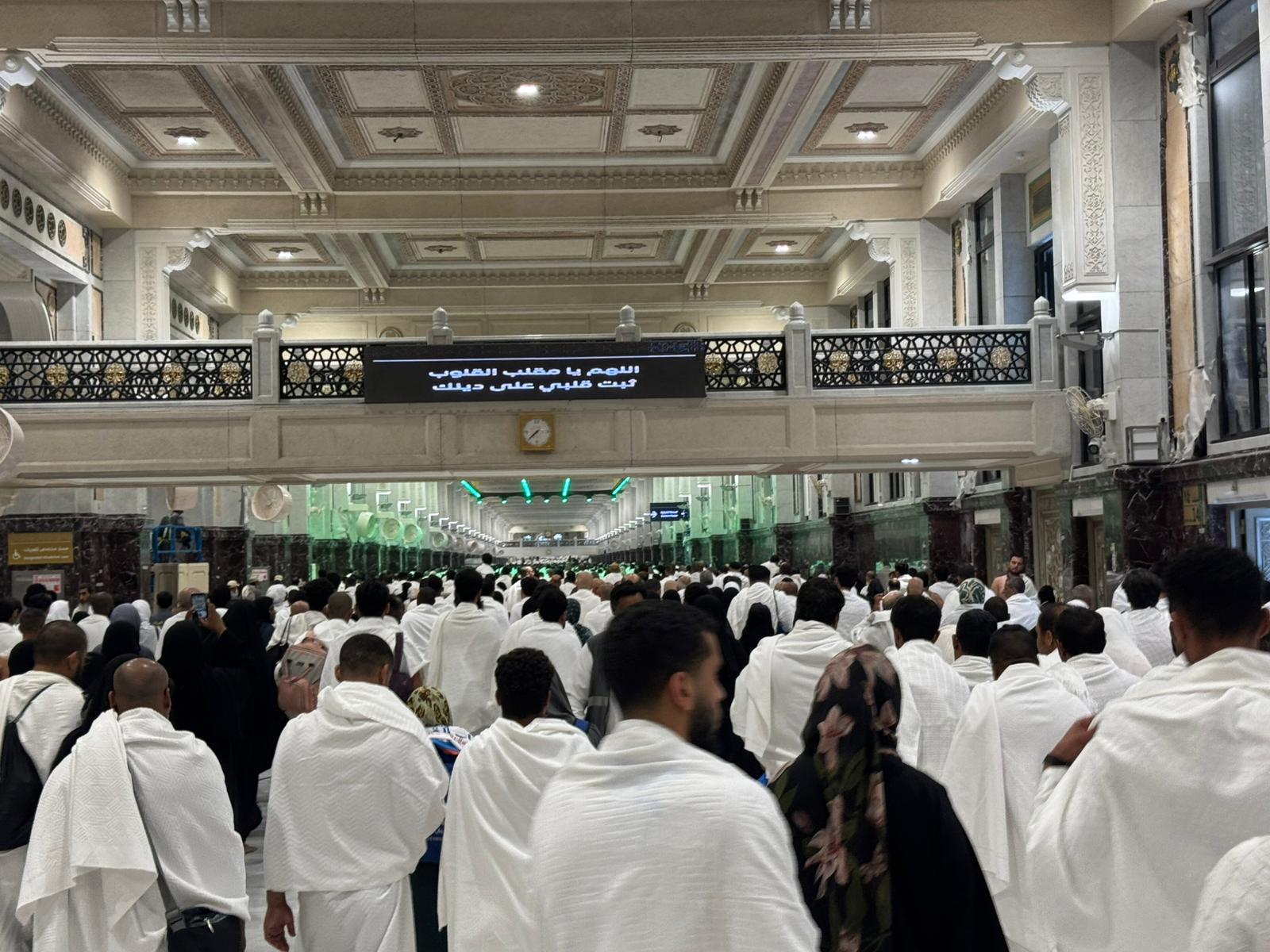
Completing Umrah: tahallul
Men:
Shaving is superior; trimming hair all around the head is acceptable.
Women:
Trim about 1–2 cm from the end of the hair.
Once hair is cut, all ihram restrictions are lifted and Umrah is complete.
Common mistakes and how to avoid them
- Pushing at the Black Stone (avoid; reward is equal from a distance)
• Forgetting how many circuits done (choose the lower number and continue)
• Wearing scented products accidentally (clean and continue; if deliberate, a sacrifice is required)
• Men covering the head
• Women doing jog between green lights (not required)
What requires a sacrifice (dam)
- Missing the miqat without ihram, or if possible you can go back and re-start your umrah.
• Shaving or clipping nails deliberately before tahallul
• Wearing forbidden clothing for an extended period
• Using perfume deliberately after ihram
• Engaging in marital relations before tahallul. This is a serious violation. It nullifies the Umrah or Hajj, and requires a sacrifice and one has to finish the Umrah and then repeat Umrah or Hajj.
Etiquette in the haram
- Do not push or raise your voice
• Move steadily, do not block others
• Avoid excessive photography inside tawaf
• Help the elderly
• Maintain calm, humility and dhikr
• Respect the sanctity of the place
Practical safety and travel advice
- Stay hydrated, especially during saʿi
• Keep your group meeting point agreed in advance
• Wear comfortable footwear
• Bring spare ihram cloths
• Use unscented soap and wipes
Checklist before travelling
- Ihram cloths and sandals
- Unscented toiletries
- Medication
- Belt or pouch
- Prayer mat
- Dua list
- Portable charger
- Zamzam-compatible bottle
- Passport, ID, and hotel details
Spiritual reminders
Umrah is not a performance, but a purification.
Keep your heart present, avoid arguments, recite Qur’an, increase dhikr, and make sincere duas.
The goal is nearness to Allah. Feel humility, gratitude, and ask Allah for acceptance.
Reward of Umrah
Umrah carries several major rewards according to authentic hadith:
It erases sins committed between one Umrah and the next.
The Prophet ﷺ said:
“From one Umrah to another is an expiation for the sins between them.” (Bukhari & Muslim)
It removes poverty and sins.
The Prophet ﷺ said Umrah and Hajj remove poverty and sins “as fire removes impurities from iron.” (Tirmidhi)
It is a form of Jihad for the weak, elderly, and women.
(Nasa’i)
The person performing Umrah becomes a guest of Allah.
He ﷺ said: “The pilgrims performing Hajj and Umrah are the guests of Allah; if they ask Him, He gives them.” (Ibn Majah)
All worship in the Haram is multiplied, including every prayer, dua, charity, tawaf, and dhikr.
FAQs
Can I perform Umrah for someone else?
Yes, with conditions. You may perform Umrah on behalf of a deceased Muslim or a living Muslim, who is unable to perform it. This is called Umrah al-Badal (substitute Umrah).
-
Your own Umrah must have been completed first. Then you would need to go back to the miqat and make intention for the person you are doing Umrah for.
-
You should make the intention at the miqat:
“O Allah, I intend to perform Umrah on behalf of [name]. Accept it from both of us.”
This is agreed upon by the majority of scholars (Hanafi, Shafi‘i, Hanbali, Maliki with some detail).
Can you perform tawaf for someone else?
After completing your Umrah, if you wish to perform additional tawaf, you may perform them and gift the reward to someone alive or deceased. Each tawaf can be gifted to separately.
Can I eat or drink during sa’i or tawaf?
Yes. Eating lightly or drinking water is allowed.
Can I talk during tawaf or sa’i?
Yes, but avoid unnecessary chatter. Keep your heart in dhikr.
What if I lose count of my tawaf rounds?
Choose the lower number to be safe, and complete from there. Or use tawaf beads to keep count.
Can I take pictures during Umrah?
It is allowed, but you should minimise it. Do not make it a photoshoot – it is an act of ibadah.
Do not interrupt tawaf or disturb others.
What dua should I recite in tawaf?
There is no fixed dua except between Rukn Yamani and the Black Stone.
You may read Qur’an, dhikr, or personal duas.
Can women perform tawaf while menstruating?
No. They must wait until they become pure.
They may do dhikr, dua, Talbiyah, and attend the Haram but cannot enter areas for tawaf.
Can women do sa’i while menstruating?
Yes. If she has already completed a valid tawaf.
If tawaf hasn’t been done yet, sa’i cannot start.
Can I shower in ihram?
Yes, as long as you do not use perfumed soap and do not remove hair deliberately.
Is using unscented deodorant allowed in ihram?
Yes. Unscented deodorant is permitted.
Can men cover their head in ihram?
No. They cannot wear hats, caps, scarves, or deliberately cover the head.
Being under an umbrella, or shade is allowed.
Am I allowed to use my phone in ihram?
Yes. The phone is not clothing.
Can I change my ihram cloth?
Yes. If it becomes dirty or uncomfortable, you may change it.
What if my ihram cloth falls off?
Simply cover yourself immediately.
There is no penalty unless you intentionally stay uncovered.
Can I sleep during ihram?
Yes. Sleeping does not affect ihram.
Do not cover the head (for men).
Can I use moisturiser or Vaseline?
Only unscented products.
Anything perfumed is not allowed.
Can I wear sunglasses or a watch?
Yes. These are not considered stitched clothing.
Can women wear socks?
Yes. Women’s feet may be covered in ihram.
Men cannot wear socks or khuffs in ihram.
What if someone pushes me or I push someone accidentally in tawaf?
Unavoidable minor contact is forgiven.
Just be gentle and avoid harming others.
Can I carry my child during tawaf or sa’i?
Yes. The Prophet ﷺ carried his grandchild while in prayer.
What if I feel unwell during Umrah?
You may pause, rest, drink water, and continue.
If medically necessary, you may take a break and continue later.
Can I leave tawaf or sa’i midway?
Yes, if needed, but return to the same position if possible (Hanafi/Shafi‘i view).
If not possible, continue from where you reasonably stopped.
Do I have to shave my whole head or just trim?
Men: Shaving is more rewarding. Trimming hair from all parts of the head is valid.
Women: Trim 1–2 cm.
Can women cut their own hair for tahallul?
Yes. They may cut their own hair or another woman may do it.
Can I do Umrah without going to Madina?
Yes. Visiting Medina is highly recommended but not part of Umrah.
Is tawaf allowed on any floor of the Haram?
Yes. Tawaf is valid on all levels.
Is fast walking in sa’i obligatory?
Men: Jog only between the green lights (not the whole sa’i), which is the sunnah. It is not obligatory.
Women: Walk normally.
Can I drink Zamzam during tawaf?
Yes.
Can I read from my phone during tawaf?
Yes. Many people recite duas or Qur’an from their phone.
What is the ruling of talking or answering calls in ihram?
Allowed, but keep speech respectful and avoid unnecessary talk.
What does NOT break ihram?
- Sleeping
• Losing wudu
• Accidentally covering the body
• Eating and drinking
• Wearing a belt or watch
• Covering with a blanket up to the neck (for men)
• Using unscented soap
Can I do tawaf on a wheelchair?
Yes. Tawaf in a wheelchair is fully valid.
If I faint during Umrah, is it valid?
Yes. Continue when you recover.
There is no penalty.
Does Umrah clear all your sins?
It is a common perception that going for ʿUmrah or Ḥajj erases one’s sins, and this is indeed true to a great extent. Both acts are immense opportunities for purification and renewal, but there are important nuances to understand.
Hajj as a purifier
The Prophet ﷺ said:
“Whoever performs Hajj and does not commit any obscenity or sin, will return (free from sin) as on the day his mother bore him.” (Bukhari and Muslim)
This hadith clearly indicates that Hajj, when performed correctly and sincerely, can be a total cleansing of sins, returning the believer to a state of spiritual purity.
As for ʿUmrah, the Prophet ﷺ said:
“One Umrah to another is an expiation for what is between them.” (Bukhari and Muslim)
These narrations show the incredible mercy of Allah in forgiving sins through these acts of worship.
This does not mean that we have a blanket cheque to sin, because we can simply go for Hajj and Umrah and have our slates wiped clean.
Major Sins vs. Minor Sins
Scholars have clarified that these hadiths generally refer to minor sins. Major sins (known as kabāʾir) are not automatically forgiven by Hajj or ʿUmrah unless true repentance (tawbah) is made.
Imam Nawawi (may Allah be pleased with him) explains:
“The scholars said that what is meant is that minor sins are expiated by acts such as Hajj, Umrah, prayer, and fasting. As for major sins, they require specific repentance.”
Conditions of true repentance
For a major sin to be forgiven, sincere repentance must meet three conditions:
1. Stop committing the sin immediately.
2. Feel regret for having committed it.
3. Firmly resolve never to return to it.
And if the sin involved violating the rights of another person, a fourth condition is added:
4. Rectify the harm, either by returning what was taken, seeking forgiveness, or compensating them.
Allah says:
“And turn to Allah in repentance, all of you, O believers, that you might succeed.” (Surat An-Nur 24:31)
Sins between you and Allah vs. Sins between you and people
It’s also critical to distinguish between:
• Sins between you and Allah – e.g. missed prayers (ṣalāh), not fasting, etc.
• Sins between you and others – e.g. backbiting, theft, injustice in business.
Hajj or ʿUmrah does not automatically forgive:
• Missed prayers: These are debts to Allah, and should be made up as qaḍāʾ (missed prayers).
The Prophet ﷺ said:
“The first thing a person will be asked about on the Day of Judgement is his prayer.” (Nasai’i)
Rights of others
Allah will not forgive sins involving another human until that person forgives or the wrong is corrected.
The Prophet ﷺ said:
“Whoever has wronged his brother with regard to his honour or anything else, let him seek his pardon before the Day comes when there will be no dinar or dirham.” (Bukhari)
Allah’s forgiveness is vast
Allah says:
“Say, ‘O My servants who have transgressed against themselves [by sinning], do not despair of the mercy of Allah. Indeed, Allah forgives all sins. Indeed, it is He who is the Forgiving, the Merciful.’” (Surat Az-Zumar 39:53)
And in a hadith qudsi, the Prophet ﷺ said:
“O son of Adam, if your sins were to reach the clouds of the sky and you were then to ask forgiveness of Me, I would forgive you.” (Tirmidhi)
This is a message of hope: no matter what your past contains, the door to repentance is always open. Going for Hajj or ʿUmrah is a powerful step, but even before or after that, a sincere heart turning to Allah will find Him ready to forgive.
Dua Resources
70 things to seek protection from
Duas for shifa/healing and cure