
Islamic rulings on body piercings, tattoos and other alterations
Ear piercing for women
Women have pierced their ears across cultures and throughout history, and this is generally permissible in Islam.
When it comes to multiple ear piercings, this enters the area of personal appearance within marriage. Islam encourages spouses to be considerate of one another’s feelings and preferences. For this reason, changes that significantly affect appearance should be approached with mutual consultation and consent. This principle applies equally to both spouses: just as a wife should not adopt an appearance her husband strongly dislikes, it would also be inappropriate for a husband to alter his appearance in a way that his wife finds distressing or unattractive.
Marriage in Islam is built on harmony, kindness, and mutual regard, not unilateral decisions.
Excessive piercings
Excessive ear piercings are not considered permissible, as they may result in harm or permanent distortion of the body. Islam does not permit practices that involve mutilation or unnecessary damage.
Allah Almighty says:
“Indeed, We created human beings in the best form.” (Surah al-Tin 95:4)
Deliberately deforming the body falls under taghyir khalq Allah, altering the creation of Allah without justification.
Furthermore, the body is an amanah (a trust). We are responsible for safeguarding it, and it has rights over us. Any practice that causes harm or lasting damage contradicts this responsibility.
Body piercings beyond the ears
Piercing parts of the body other than the ears, such as the face, tongue, lips, navel, or genitalia, is not permitted. These practices carry medical risks and alter the natural human form in ways Islam discourages.
Allah warns us in the Qur’an that Shayṭan beautifies harmful and corrupt practices:
“And I will surely mislead them… and I will command them so they will change the creation of Allah.” (Surah al-Nisaʾ 4:119)
While some cultures historically practiced body modification, such as stretching earlobes among certain tribes, Islam does not accept distortion of the body as a valid expression of beauty or virtue, regardless of cultural precedent.
Culture does not define halal and haram
Widespread cultural practice does not make something permissible in Islam. Some harmful customs, such as female genital mutilation, have existed for centuries in certain societies, yet they have no basis in Islam and must be actively rejected.
Islam prioritises human dignity, health, and protection from harm. When a cultural practice violates these values, it must be abandoned, no matter how common or longstanding it may be.
Piercings for men
Men are not permitted to have body piercings. In Islam, certain forms of adornment, such as jewellery (with the exception of a silver ring), makeup, and similar beautification, are specifically designated for women. Men are instructed to maintain a distinct masculine identity and not imitate feminine styles.
The Prophet ﷺ said:
“Allah has cursed men who imitate women and women who imitate men.” (Bukhari)
This guidance is not about demeanour or personality, but about deliberately adopting the outward markers of the opposite sex.
A relevant incident illustrates this principle. Some men who were assumed to have no attraction to women were initially allowed to mingle freely. However, when one such man demonstrated explicit awareness of women’s physical features, the Prophet ﷺ ordered that such individuals should no longer have unrestricted access to homes.
This reinforced the principle of safeguarding modesty and boundaries.
Tattoos
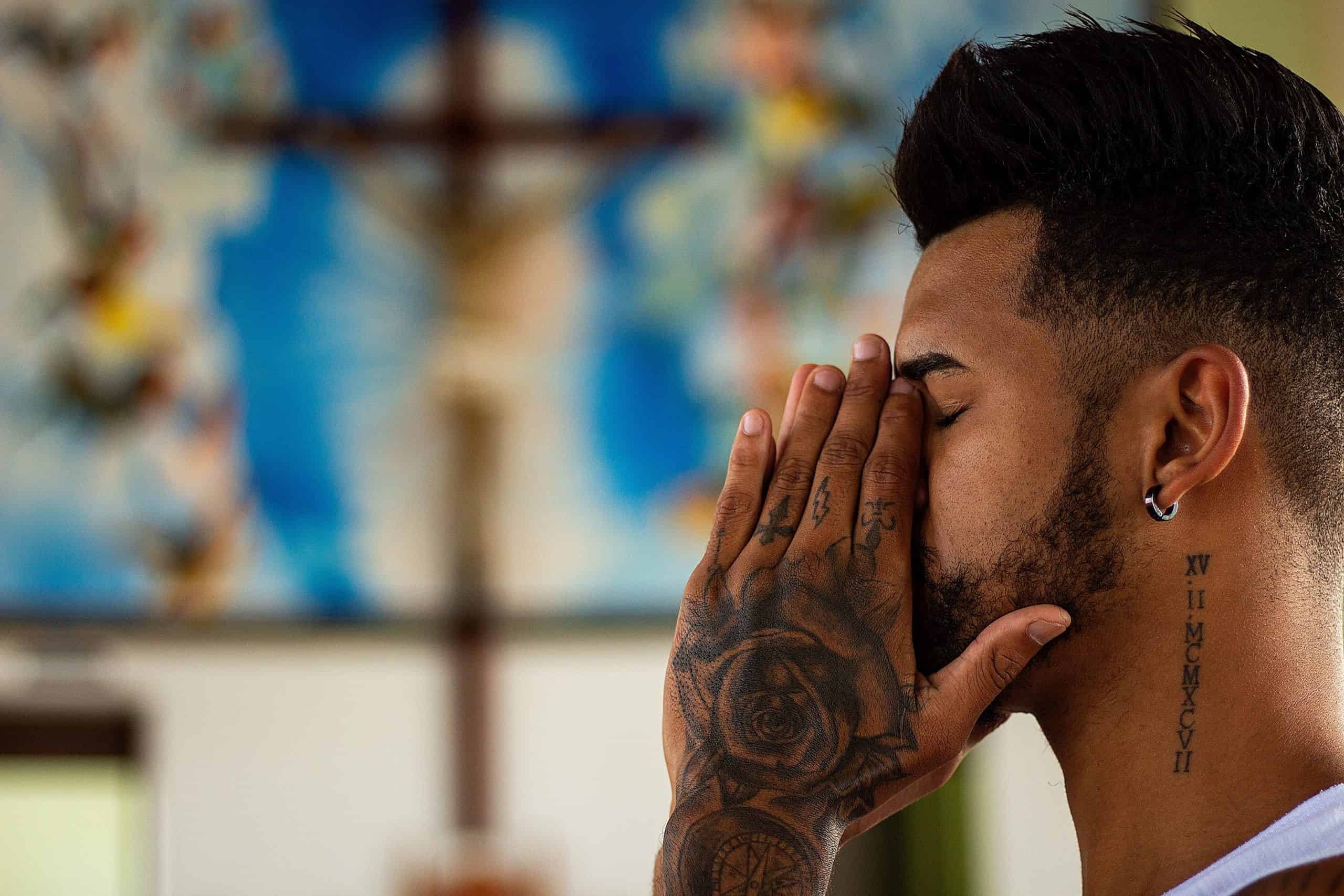
Permanent tattoos are not permissible in Islam. The Prophet ﷺ explicitly cursed those who perform tattoos and those who receive them.
‘Abdullah ibn Masʿud (may Allah be pleased with him) reported:
“May Allah curse those who tattoo and those who are tattooed, those who pluck eyebrows and those who file teeth for beautification and alter the creation of Allah.” (Bukhari and Muslim)
Some cultures, such as Amazigh (Berber) communities, traditionally practiced facial and body tattoos. While these are not permissible, a person who had tattoos imposed upon them in childhood bears no sin. Removal is only required if it is safe and feasible.
Henna tattoos, which are temporary and do not involve needles, are permissible.
Hairstyles
The Prophet ﷺ forbade a hairstyle known as al-qazaʿ, which involves shaving parts of the head while leaving other parts unevenly covered.
He ﷺ said:
“Shave all of it or leave all of it.” (Abu Dawud)
At the time, such patchy hairstyles were associated with groups of questionable reputation or specific religious communities. Islam encourages Muslims to maintain a clear, dignified identity.
Today, fade hairstyles, shorter on the sides and longer on top, are widespread and, in general, permissible, provided they do not involve extreme patchiness, shaved designs, or intentional distortion of appearance.
Islam promotes moderation. A haircut should be neat, dignified, and not exaggerated to the point of deformity or imitation of disreputable styles.
Trends change constantly. Principles do not.
Following trends does not elevate a person. Upholding values does.
Be confident in your identity and proud of the guidance Allah has given you.
Based on the course delivered by Shaykh Haytham Tamim – Culture vs Islam (Western Culture), 2020
Related posts
What beauty treatments are permitted in Islam?
Fade hairstyles, tatoos and piercings
Common misconceptions: do women have to cover their feet?
Jazakumullahu khayran for spending time learning with us. We need your support to enable us to reach more people and spread authentic knowledge. Every contribution big or small is valuable to our future.
‘If anyone calls others to follow right guidance, his reward will be equivalent to those who follow him (in righteousness) without their reward being diminished in any respect.’ (Muslim)