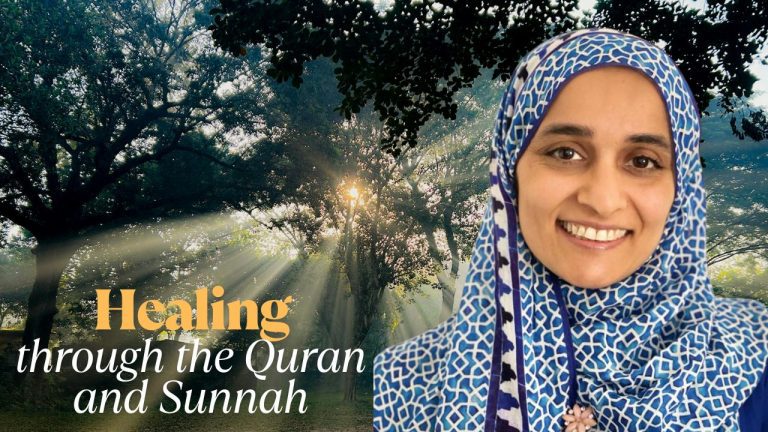
Healing from the Quran and Sunnah (part 6) – wellbeing (afiya) practices and environment

Healing from the Quran and Sunnah (part 6) – wellbeing (afiya) practices and environment

  Gratitude Ann enormous principle of wellbeing is gratitude. Allah says: لَئِن شَكَرْتُمْ لَأَزِيدَنَّكُمْ “If you are grateful, I will certainly give you more.”(Surah Ibrahim, 14:7) And Allah leaves that increase open. It may be an increase in the blessing itself, or in our ability to recognise it. Sometimes the circumstances have not changed at…

Healing from the Quran and Sunnah (part 5) – physical health, sleep and strong emotions

Healing from the Quran and Sunnah (part 5) – physical health, sleep and strong emotions

  The Prophet ﷺ said: الْمُؤْمِنُ الْقَوِيُّ خَيْرٌ وَأَحَبُّ إِلَى اللَّهِ مِنَ الْمُؤْمِنِ الضَّعِيفِ، وَفِي كُلٍّ خَيْرٌ “The strong believer is better and more beloved to Allah than the weak believer, although there is good in both.”(Sahih Muslim) I would not limit “strong” here to somebody who is physically strong. There is strength of faith,…

Healing from the Quran and Sunnah (part 3) – the holistic approach, ruqya, fasting and moderation

Healing from the Quran and Sunnah (part 3) – the holistic approach, ruqya, fasting and moderation

  Hospitals – bimaristans There is another concept which is not directly tibb al-Nabawi, but I think it follows very naturally from this idea of holistic healing, and that is the bimaristan. Dr Rania Awaad has done a great deal of work recovering the history of these institutions. Bimaristans were hospitals in the Muslim world…

Healing from the Quran and Sunnah (part 2) – the connection between body, mind and soul

Healing from the Quran and Sunnah (part 2) – the connection between body, mind and soul

  What is tibb al-nabawi? What do we actually mean by tibb al-nabawi, or prophetic medicine? There are detailed classical works devoted to the subject, and it can be approached as a field in its own right. But for the purposes of this discussion, I want to keep it practical. I am using the term…

Healing from the Quran and Sunnah (part 1) – what is healing?

Healing from the Quran and Sunnah (part 1) – what is healing?

  Healing with the Quran and Sunnah I was looking recently at some of the Hikam, the aphorisms of Ibn Ataillah al-Iskandari, and one of them really stayed with me: من أشرقت بدايته أشرقت نهايته “Whoever has a luminous beginning will have a luminous end.”(Ibn Ataillah al-Iskandari, al-Hikam al-Ata’iyyah) I thought that was very powerful….

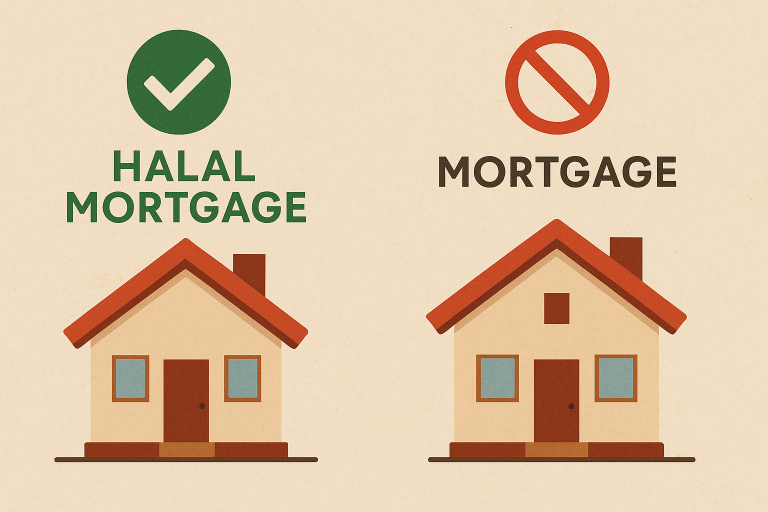
What is the difference between Islamic mortgages and conventional mortgages
| |

What is the difference between Islamic mortgages and conventional mortgages

The difference between conventional and Islamic mortgages For Muslims, one of the greatest financial challenges of our time, is purchasing a home without falling into riba (interest), which is strictly prohibited in Islam. Conventional mortgages are based on interest-bearing loans, while Islamic banks and financial institutions offer alternatives that aim to comply with Shariah. Among…

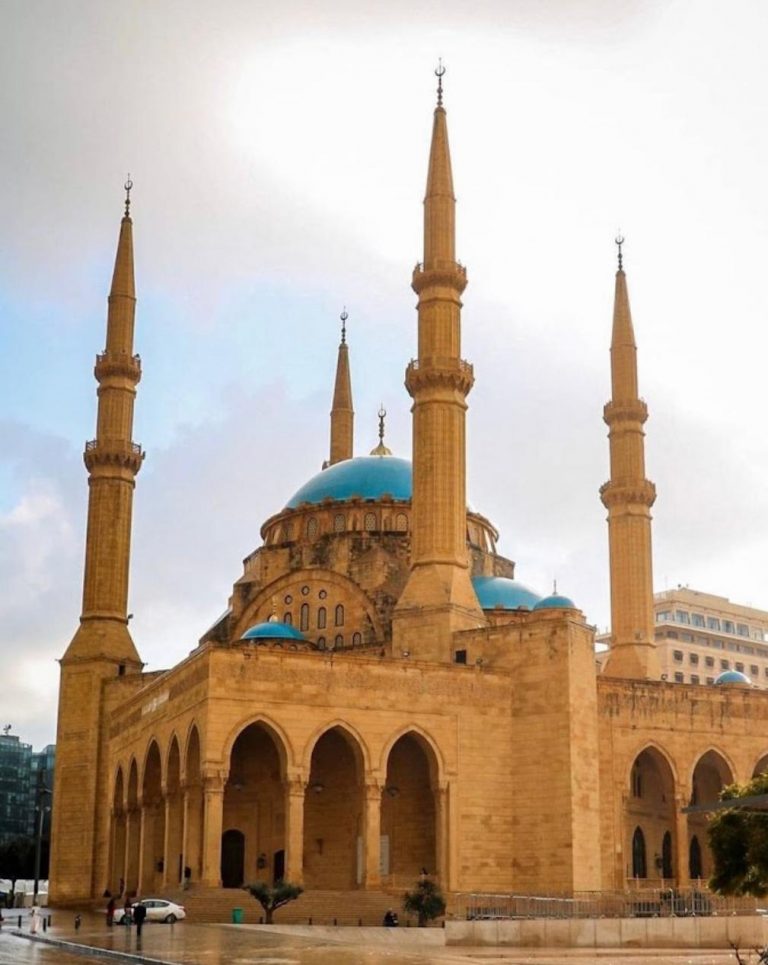
mosque in Beirut

The joy of serving the sunnah of Rasulullah ﷺ

The ears are adorned by hearing the words of the Messenger of Allah ﷺ. وَلاَ حَسَنٌ إِلاَّ سَمَاعُ حَدِيثِكُمْ …. مُشَافَهَةً يُمْلَى عَلَىَّ فَأَنْقُلُ “Nothing is truly beautiful except hearing your narrations firsthand — received directly from your lips, dictated to me, and then faithfully transmitted by me.” This is a verse from the poem…

How did Imam al-Bukhari collect so many hadith?
|

How did Imam al-Bukhari collect so many hadith?

How did Imam al-Bukhari gather and verify thousands of hadith without modern technology? This article explores the rigorous science behind Sahih al-Bukhari, including oral preservation, narrator verification, written documentation, and the methodology that made his collection the most respected hadith compilation in Sunni Islam.