
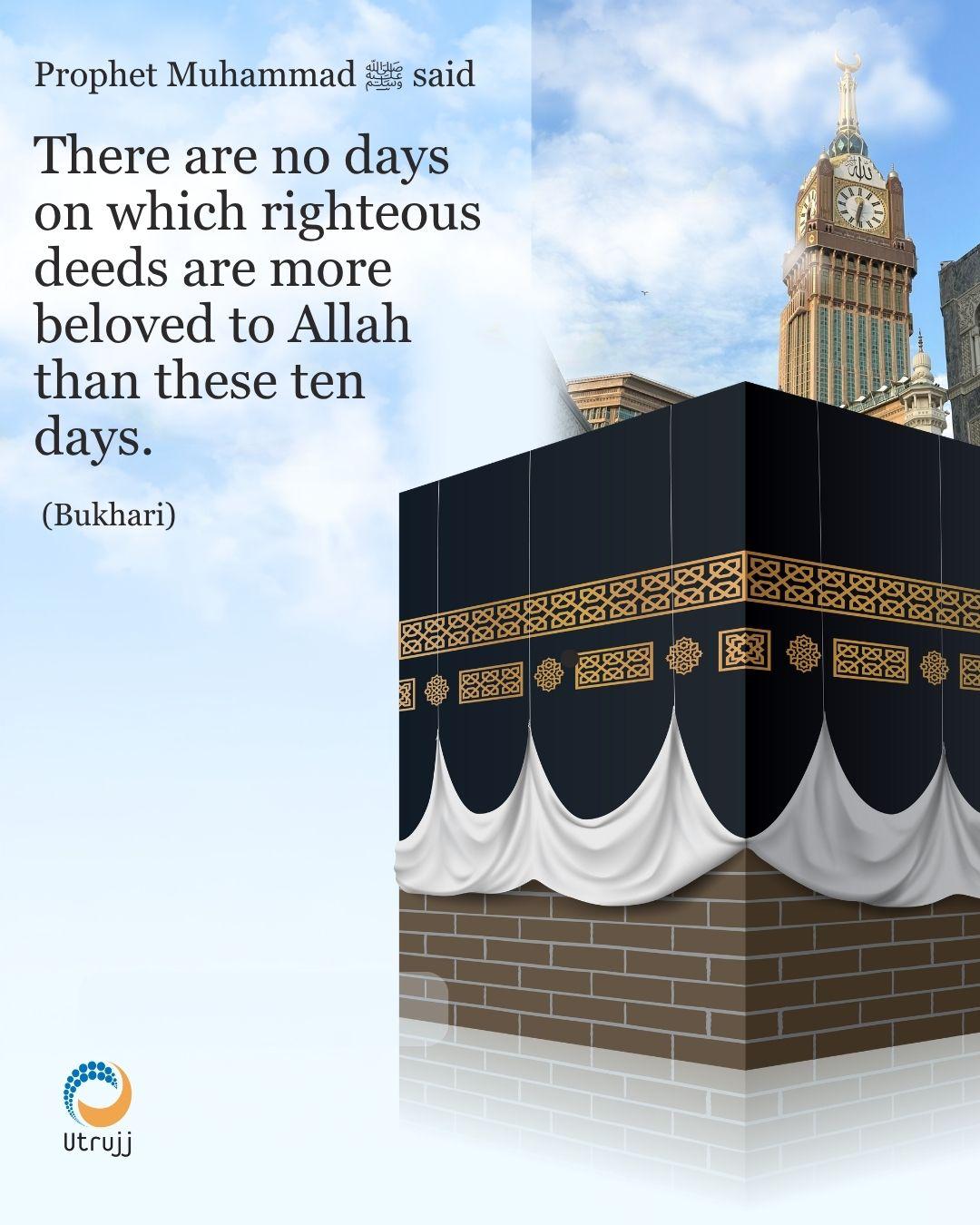
The Sacred Month of Dhul Hijjah, Hajj and the peace Allah grants
Allah Almighty says:
إِنَّ عِدَّةَ الشُّهُورِ عِندَ اللَّهِ اثْنَا عَشَرَ شَهْرًا فِي كِتَابِ اللَّهِ يَوْمَ خَلَقَ السَّمَاوَاتِ وَالْأَرْضَ مِنْهَا أَرْبَعَةٌ حُرُمٌ ۚ ذَٰلِكَ الدِّينُ الْقَيِّمُ ۚ فَلَا تَظْلِمُوا فِيهِنَّ أَنفُسَكُمْ
Indeed, the number of months ordained by Allah is twelve months in the record of Allah, from the day He created the heavens and the earth, of which four are sacred. That is the upright religion, so do not wrong yourselves during them.
(Surat al-Tawbah 9:36)
In this ayah, from Surat al-Tawbah, Allah Almighty teaches us that our calendar consists of twelve months. From these twelve months, four have been given a special status. They are known as the sacred months: Rajab on its own, and then three consecutive months: Dhul Qa‘dah, Dhul Hijjah and Muharram.
These months were given a special honour because they are connected to special acts of worship. Rajab, even before Islam, was known among the Arabs as a month in which people would travel for Umrah. Allah Almighty made it a special month, a time dedicated to worship, safety, security, tranquillity and peace for those who were travelling to His House.
Similarly, the three consecutive months are connected to Hajj. Dhul Qa‘dah comes before Hajj, Dhul Hijjah is the month of Hajj, and Muharram comes after it. In earlier times, travel was not like it is today. People did not have planes, cars or modern transport. They travelled by caravan, on horses, camels or on foot. For those who were not local to Makkah, they needed time to travel there, time to stay and perform the rituals, and then time to return home.
For this reason, these three months were given a special status. One month was needed to reach Makkah, one month to perform the rituals, and one month to return. During these sacred months, fighting was not allowed to be initiated. If others transgressed and attacked, that was a different matter, but Muslims were not permitted to begin fighting or create insecurity. Anything that disrupted peace, safety and security was prohibited.
This shows us that safety, security and peace are central to our religion. Allah Almighty draws our attention to this in different places in the Qur’an. He says:
فَلْيَعْبُدُوا رَبَّ هَٰذَا الْبَيْتِ الَّذِي أَطْعَمَهُم مِّن جُوعٍ وَآمَنَهُم مِّنْ خَوْفٍ
Let them worship the Lord of this House, who fed them against hunger and granted them security from fear.
(Surat Quraysh 106:3–4)
Allah refers to the Haram as a safe sanctuary.
Did We not establish for them a safe sanctuary to which all kinds of products are brought as provision from Ourself?
(Surat al-Qasas, 24:57)
Safety is not a side issue in Islam. It is at the heart of our teachings.
Allah Almighty teaches us that if we want to achieve outer peace, we first need inner peace. Inner peace comes from being connected to Allah, following His commands and living according to His guidance. When the heart is at peace with Allah, this should then be reflected in the way we live with others.
As we approach Dhul Hijjah, many people will already be preparing for Hajj, and some may already be on their way. For those who have been called to perform Hajj, we envy them in a good way. It is a journey of a lifetime. It is a call from Allah Almighty for those who are able to fulfil it.
Allah Almighty says:
وَلِلَّهِ عَلَى النَّاسِ حِجُّ الْبَيْتِ مَنِ اسْتَطَاعَ إِلَيْهِ سَبِيلًا
And Hajj to the House is a duty owed to Allah by people who are able to make their way to it.
(Surat Al ‘Imran 3:97)
This obligation, the fifth pillar of Islam, is connected to ability. Hajj is not required from everyone in the same way regardless of their circumstances. It is an obligation for those who are able to perform it.
The scholars explain that ability has different aspects. The first is financial ability. A person must be able to afford Hajj. The second is physical ability. A person must be healthy enough to undertake the journey and perform the rituals. The third is safety. The journey must be safe enough for the person to travel. In some cases, we may also consider mental ability. If a person is not mentally able to manage the journey and the rituals, then Hajj is not obligatory upon them in that state.
This shows the mercy and ease in the Shariah. If someone does not have the financial means to go for Hajj, then it is not yet an obligation upon them. They should not borrow money in order to go. They should not place themselves under the burden of debt for something that has not yet become compulsory for them. Sadly, some people may even take loans involving interest because they desperately want to perform Hajj. This is not correct. Interest is haram, and a person should not enter into haram in order to perform an act of worship.
Even if the loan is interest-free, a person should still be careful. They do not know whether they will be able to repay it. Hajj becomes obligatory when the money is genuinely available, after a person has taken care of their necessary expenses, debts and responsibilities. Alongside that, they must also have the required health and safety to travel and complete the rituals.
The scholars also discuss whether Hajj is an immediate obligation once a person becomes able to perform it. The answer is yes. Once a person has the ability, they should not postpone it without a valid reason. They do not know what may happen later. They may have the money now but not later. They may have the health now but not later. They may have the opportunity now but not later.
Sometimes people say, “I am still young. I will go for Hajj when I am older.” But who has guaranteed that they will live until old age? Who can guarantee even tomorrow? No one can.
So if you are able to perform Hajj, do not delay it unnecessarily. If you have not yet gone and you are unable, make the intention sincerely. Say, “Ya Rabbi, I want to perform Hajj. Facilitate it for me.” If you are sincere, Allah Almighty can open a way for you. Even if you do not currently have the financial means, sincerity can become a means through which Allah enables you to fulfil your obligation, insha’Allah.
Do not postpone your obligation
Do not postpone your obligation when you are able to fulfil it. If Allah Almighty has given you the means, the health and the opportunity, do not delay.
Some people are already in Makkah. Others are preparing to leave. Around this time, people often begin sending messages saying, “Please forgive me. I am going for Hajj.” Many people do this without fully understanding why this practice became common.
Historically, the journey to Hajj was not like it is today. It was not a few hours on a plane. People travelled by camel, on foot or in caravans. For some, it took a month or even two months to reach Makkah, and then another month or two to return. It was a long, tiring and dangerous journey. Many people died on the way.
Even today, people die during Hajj. In Makkah, even outside the Hajj season, you often pray janazah every day because people pass away there. During Hajj, many more people die. This is one of the reasons people ask for forgiveness before leaving. They want to settle their accounts before they die.
But if you can settle your accounts now, do not wait for Hajj. Ask people for forgiveness now, whether you are travelling for Hajj or not. If you have wronged someone, try to put it right. If you owe someone money, repay it. If you have hurt someone, apologise. Do not leave your record stained when Allah has given you the chance to clean it.
Death is close to every one of us. No one knows when they will meet Allah. This is why forgiveness matters. The deeper meaning behind asking people to forgive you before Hajj is not just a tradition. It is about clearing your accounts before a journey from which you may not return.
Hajj is a journey to Allah. Yet we should also ask ourselves: do we really need to travel to Makkah in order to find Allah, meet Allah or please Allah? Can we not please Allah here? Can we not draw close to Him in our daily lives?
Of course we can. Allah Almighty says:
وَلَقَدْ خَلَقْنَا الإِنسَانَ وَنَعْلَمُ مَا تُوَسْوِسُ بِهِ نَفْسُهُ ۖ وَنَحْنُ أَقْرَبُ إِلَيْهِ مِنْ حَبْلِ الْوَرِيدِ
We have certainly created man and know what his soul whispers to him, and We are closer to him than his jugular vein.
(Surat Qaf 50:16)
And Allah Almighty says:
وَإِذَا سَأَلَكَ عِبَادِي عَنِّي فَإِنِّي قَرِيبٌ ۖ أُجِيبُ دَعْوَةَ الدَّاعِ إِذَا دَعَانِ
When My servants ask you concerning Me, indeed I am near. I respond to the call of the caller when he calls upon Me.
(Surat al-Baqarah 2:186)
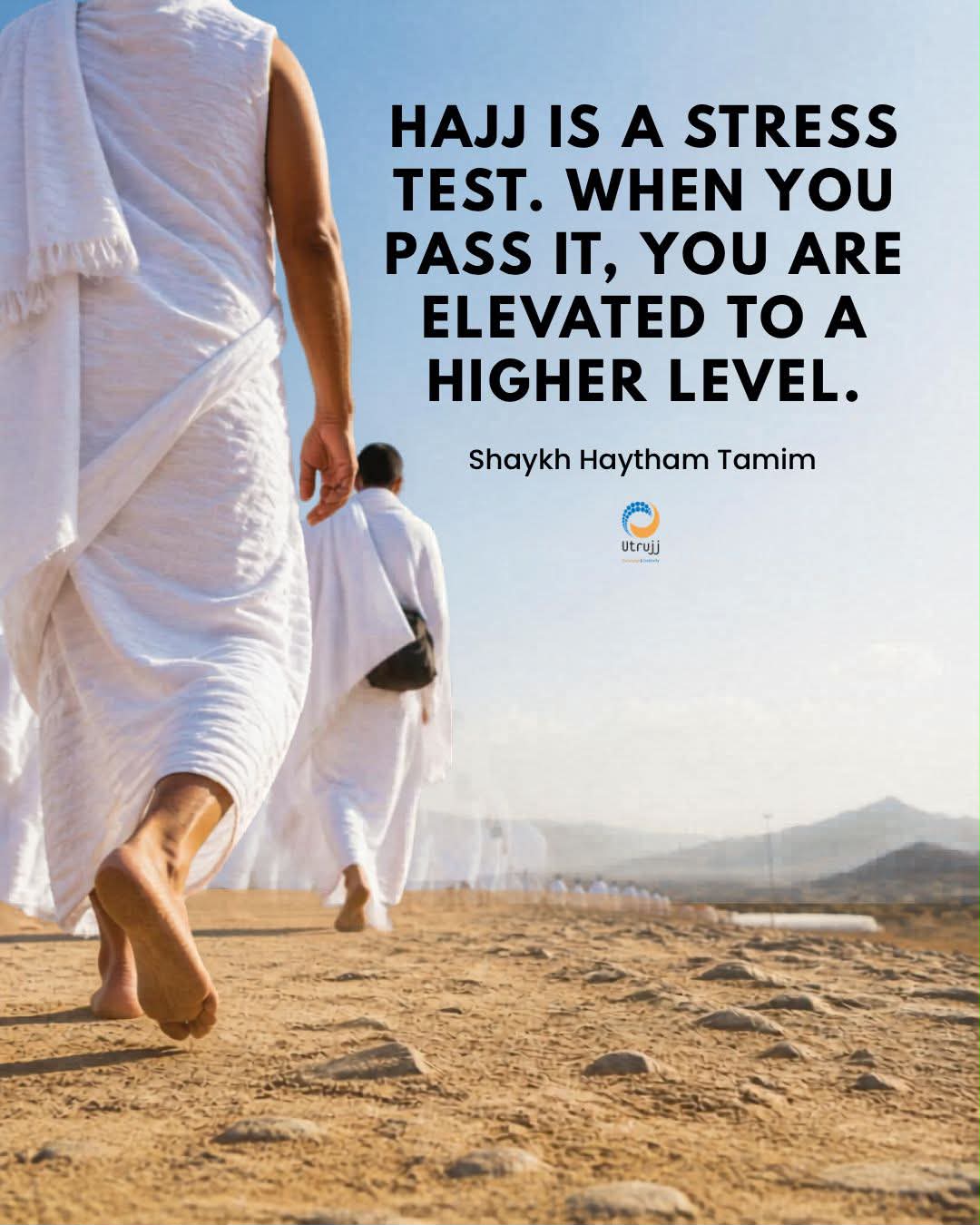
Allah is near. We do not need to travel miles in order to find Him. Yet Hajj remains an obligation for those who are able to perform it. It is not an ordinary journey. It is a journey of transformation. It is a spiritual stress test. When a person passes through it correctly, Allah elevates them to another level.
 The Prophet ﷺ said:
مَنْ حَجَّ لِلَّهِ فَلَمْ يَرْفُثْ وَلَمْ يَفْسُقْ، رَجَعَ كَيَوْمِ وَلَدَتْهُ أُمُّهُ
Whoever performs Hajj for Allah and does not engage in obscenity or sinful conduct will return like the day his mother gave birth to him.
(Bukhari and Muslim)
A person can return from Hajj with a clean slate, like a newborn baby. But this is for the one who performs Hajj sincerely and correctly, and who has also settled what they owe to others. If they have debts, they must repay them. If they have wronged people, they must seek their forgiveness. If they have taken people’s rights, they must return them. Otherwise, stains remain on the page, and those stains still need to be removed.
As we approach Dhul Hijjah, we are approaching very special days. The Prophet ﷺ said:
ما من أيام العمل الصالح فيهن أحب إلى الله من هذه الأيام العشر ، قالوا : ولا الجهاد في سبيل الله ؟ قال : ولا الجهاد في سبيل الله ؛ إلا رجل خرج بنفسه وماله فلم يرجع من ذلك بشيء
There are no days in which righteous deeds are better than in these ten days. They said, “Not even jihad?” He said, “Not even jihad, except for a man who goes out risking himself and his wealth and returns with nothing.”
(Bukhari)
These are the first ten days of Dhul Hijjah. They are days in which good deeds are especially beloved to Allah Almighty. For those who are not going to Hajj, this is still a great opportunity. We can fast, give charity, increase our salah, recite Qur’an, make dua and increase in dhikr.
It is narrated that the Prophet ﷺ used to fast the first nine days of Dhul Hijjah, the day of Ashura and three days of every month:
كَانَ رَسُولُ اللَّهِ ﷺ يَصُومُ تِسْعَ ذِي الْحِجَّةِ، وَيَوْمَ عَاشُورَاءَ، وَثَلَاثَةَ أَيَّامٍ مِنْ كُلِّ شَهْرٍ
The Messenger of Allah ﷺ used to fast the first nine days of Dhul Hijjah, the day of Ashura and three days of every month.
(Abu Dawud and al-Nasa’i)
The tenth day itself is Eid, so it is not permissible to fast on that day. The fasting being referred to is the first nine days, especially the Day of Arafah for those who are not performing Hajj.
The Prophet ﷺ was asked about fasting on the Day of Arafah and he said:
يُكَفِّرُ السَّنَةَ الْمَاضِيَةَ وَالْبَاقِيَةَ
It expiates the sins of the previous year and the current year.
(Muslim)
So if you are able to fast on the Day of Arafah, then fast. It is an extra reward and a means of drawing closer to Allah Almighty.
During these ten days, we should also increase in tasbih, tahlil, takbir and tahmid:
سُبْحَانَ اللَّهِ
Glory be to Allah.
وَالْحَمْدُ لِلَّهِ
All praise is due to Allah.
وَلَا إِلَٰهَ إِلَّا اللَّهُ
There is no god but Allah.
وَاللَّهُ أَكْبَرُ
Allah is the Greatest.
This was from the practice of the Prophet ﷺ and his companions during these blessed days.
عَنْ سَمُرَةَ بْنَ جُنْدُبٍ ، قَالَ : قَالَ رَسُولُ اللَّهِ صَلَّى اللَّهُ عَلَيْهِ وَسَلَّمَ : ” أَفْضَلُ الْكَلَامِ بَعْدَ الْقُرْآنِ – وَهُوَ مِنَ الْقُرْآنِ – أَرْبَعٌ لَا يَضُرُّكَ بِأَيِّهِنَّ بَدَأْتَ : سُبْحَانَ اللَّهِ، وَالْحَمْدُ لِلَّهِ، وَلَا إِلَهَ إِلَّا اللَّهُ، وَاللَّهُ أَكْبَرُ “. رواه أحمد وحكم الحديث: إسناده صحيح.
Samurah ibn Jundub (may Allah be pleased with him) that the Messenger of Allah ﷺ said:
“The best words after the Qur’an – and they are also from the Qur’an – are four. It does not matter with which of them you begin: Subḥān Allāh (Glory be to Allah), Al-ḥamdu lillāh (Praise be to Allah), Lā ilāha illā Allāh (There is no god except Allah), Allāhu Akbar (Allah is the Greatest).” (Ahmad)
Alongside increasing in good deeds, it goes without saying that we must also refrain from anything that displeases Allah, during these ten days and beyond them.
In the ayah mentioned at the beginning, Allah Almighty says:
فَلَا تَظْلِمُوا فِيهِنَّ أَنفُسَكُمْ
So do not wrong yourselves during them.
(Surat al-Tawbah 9:36)
Allah forbids transgression and oppression, especially in these sacred months. He commands us to uphold justice and fairness. This is why we must continue to stress these principles and hold firmly to them. We should seek justice and fairness among ourselves, and for those around us.
When people peacefully support their brothers and sisters in Palestine, this too is part of seeking justice and standing with the oppressed. It must always be done peacefully, because this is what Islam teaches us: to be people of peace, justice and goodness.
We ask Allah Almighty to enable us to seize these blessed days, increase our reward, draw us closer to Him, and make us righteous and sincere servants. We ask Allah to elevate and grant relief to the people of Palestine, and to all those who are oppressed. Ameen.
Based on the khutbah of Shaykh Haytham Tamim on 15th May 2026.