
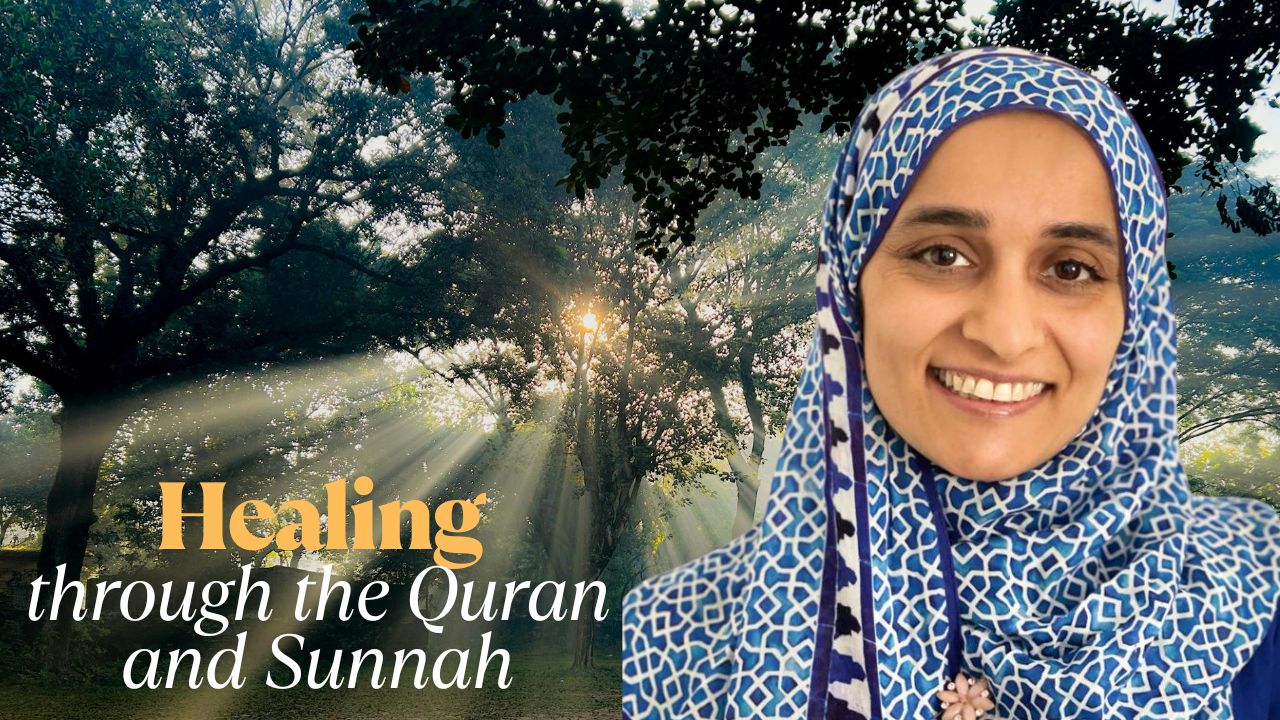
Healing from the Quran and Sunnah (part 5) – physical health, sleep and strong emotions
The Prophet ﷺ said:
الْمُؤْمِنُ الْقَوِيُّ خَيْرٌ وَأَحَبُّ إِلَى اللَّهِ مِنَ الْمُؤْمِنِ الضَّعِيفِ، وَفِي كُلٍّ خَيْرٌ
“The strong believer is better and more beloved to Allah than the weak believer, although there is good in both.”
(Sahih Muslim)
I would not limit “strong” here to somebody who is physically strong. There is strength of faith, strength of character, emotional resilience and the ability to keep going when life is difficult. But physical strength certainly has its place within that wider picture.
Our bodies are made to move, and one of the simplest things we can do for our health is to stop living such sedentary lives.
When the Prophet ﷺ walked, the descriptions do not give us the picture of somebody shuffling slowly along. Ali (may Allah be pleased with him) described him walking with purpose, leaning slightly forwards, as though he were descending a slope. Another description says that his gait was brisk.
There is also a report that the Prophet ﷺ wrestled Rukanah and defeated him and kept winning. He encouraged activities which required skill and physical training. The Prophet ﷺ said:
لَيْسَ مِنَ اللَّهْوِ إِلَّا ثَلَاثٌ: تَأْدِيبُ الرَّجُلِ فَرَسَهُ، وَمُلَاعَبَتُهُ أَهْلَهُ، وَرَمْيُهُ بِقَوْسِهِ وَنَبْلِهِ
“There is no worthwhile amusement except three: a man training his horse, playing with his wife and shooting with his bow and arrow.”
(Sunan Abi Dawud)
There is something lovely in that hadith because it does not give us a picture of religious life as sitting still all day. There is training, recreation, family life and skill.
Swimming is often added when this hadith is quoted, but it is not in this particular authentic wording, so I would rather not attribute that addition to the Prophet ﷺ without a separate reliable source.
We also know that the prophets were shepherds. The Prophet ﷺ said:
مَا بَعَثَ اللَّهُ نَبِيًّا إِلَّا رَعَى الْغَنَمَ
“Allah did not send any prophet except that he shepherded sheep.”
(Sahih al-Bukhari)
That would have involved hours outdoors, walking, watching, waiting and looking after animals. There is physical activity in it, but also patience and attention. It is a very different way of occupying the body and mind from sitting at a desk with six tabs open and notifications going off every thirty seconds.
We touched earlier on sitting on the floor. I do think there is something useful in retaining the ability to get down onto the floor and get back up again comfortably. It requires mobility and strength in a way that sitting in a chair does not. I would not turn that into a claim that floor-sitting itself guarantees longevity, but maintaining mobility as we age is certainly worth protecting.
Sleep
Sleep could be an entire talk on its own.
The prophetic rhythm was not one of endlessly staying awake in the name of productivity. The Prophet ﷺ disliked unnecessary conversation after Isha, and he also disliked sleeping before the Isha prayer. There was a rhythm to the night: prayer, sleep and, for him especially, substantial night worship.
The Quran itself treats sleep as one of Allah’s signs:
وَمِنْ آيَاتِهِ مَنَامُكُم بِاللَّيْلِ وَالنَّهَارِ وَابْتِغَاؤُكُم مِّن فَضْلِهِ
“And among His signs is your sleep by night and by day, and your seeking of His bounty.”
(Surah al-Rum, 30:23)
Sleep is not wasted time. It is part of being human.
Ayat al-Kursi reminds us that Allah is entirely unlike His creation:
لَا تَأْخُذُهُ سِنَةٌ وَلَا نَوْمٌ
“Neither drowsiness nor sleep overtakes Him.”
(Surah al-Baqarah, 2:255)
We need sleep. Allah does not.
There was also a tradition of qaylulah, resting or sleeping for a short period around the middle of the day. We find this practice among the early Muslims, including reports from the Companions.
We are human beings. Muslims experience sadness, anxiety, grief and mental illness just as human beings experience physical illness. Faith can be an extraordinary source of resilience and healing, but having faith does not mean that you cease to have a human nervous system, a human mind or a human response to loss and trauma.
As a GP, I see this all the time. Somebody may come in with a physical illness, but there is often much more going on around it. They may be grieving, under enormous pressure at work, caring for somebody, struggling in a relationship or frightened about a diagnosis. If you have cancer, that affects your mind as well as your body. If you are chronically anxious or stressed, you may feel it physically. We are not divided into separate compartments, with the mind over here, the body over there and the soul somewhere else.
Allah acknowledges human distress throughout the Quran, and we see the same compassion in the Sunnah.
There is a beautiful hadith narrated by Anas (may Allah be pleased with him) about a woman who was described as having something affecting her mind. She approached the Prophet ﷺ and told him that she needed something from him. He did not dismiss her, hurry her or make her feel that she was a nuisance. He told her to choose whichever part of the road she wished, and he stood aside with her until she had finished telling him what she needed.
There is something very simple in that, but also very powerful. He gave her his attention. Sometimes that is the first thing somebody in distress needs: to be heard and taken seriously.
The Prophet ﷺ also said:
مَنْ نَفَّسَ عَنْ مُؤْمِنٍ كُرْبَةً مِنْ كُرَبِ الدُّنْيَا نَفَّسَ اللَّهُ عَنْهُ كُرْبَةً مِنْ كُرَبِ يَوْمِ الْقِيَامَةِ
“Whoever relieves a believer of one of the distresses of this world, Allah will relieve him of one of the distresses of the Day of Resurrection.”
(Sahih Muslim)
So supporting somebody through distress is not peripheral to the deen. It is an act of worship.
And look at the lives of the Prophets themselves. They experienced grief, fear, uncertainty and tremendous pressure. The Prophet ﷺ lost Khadijah رضي الله عنها and Abu Talib within a short period. When his young son Ibrahim died, he wept. He did not pretend that faith meant he felt nothing. He said:
إِنَّ الْعَيْنَ تَدْمَعُ، وَالْقَلْبَ يَحْزَنُ، وَلَا نَقُولُ إِلَّا مَا يُرْضِي رَبَّنَا، وَإِنَّا بِفِرَاقِكَ يَا إِبْرَاهِيمُ لَمَحْزُونُونَ
“The eyes shed tears and the heart grieves, but we say only what pleases our Lord. O Ibrahim, we are indeed grieved by your separation.”
(Sahih al-Bukhari)
I think that hadith is enormously important when we talk about mental health. The Prophet ﷺ does not deny the grief. He names it. His heart is grieving and his eyes are crying, but the grief exists alongside submission to Allah.
Prophet Yaqub (peace be upon him) grieved so deeply for Yusuf (peace be upon him) that Allah tells us:
وَابْيَضَّتْ عَيْنَاهُ مِنَ الْحُزْنِ فَهُوَ كَظِيمٌ
“His eyes turned white from grief, while he suppressed his sorrow.”
(Surah Yusuf, 12:84)
We sometimes hear this described as Yaqub developing cataracts, but the Quran itself simply tells us that his eyes turned white from grief, so I would not go further than that medically.
And yet his grief did not mean that he had lost his relationship with Allah. He said:
إِنَّمَا أَشْكُو بَثِّي وَحُزْنِي إِلَى اللَّهِ
“I complain of my anguish and sorrow only to Allah.”
(Surah Yusuf, 12:86)
There is a difference between feeling grief and being spiritually lost within it.
Think also of Maryam (peace be upon her). During the pains of childbirth, alone and facing the prospect of returning to her people with a child, she reached a point of such overwhelming distress that she said:
يَا لَيْتَنِي مِتُّ قَبْلَ هَذَا وَكُنتُ نَسْيًا مَّنسِيًّا
“If only I had died before this and become something completely forgotten.”
(Surah Maryam, 19:23)
The Quran does not hide that moment. This is Maryam, one of the greatest women ever to have lived, and we are shown her at a point of extraordinary vulnerability.
Musa (peace be upon him) also felt the weight of what he was being asked to do. When Allah commanded him to go to Firaun, he did not respond as though it was effortless. He turned to Allah and asked for help:
رَبِّ اشْرَحْ لِي صَدْرِي وَيَسِّرْ لِي أَمْرِي وَاحْلُلْ عُقْدَةً مِّن لِّسَانِي يَفْقَهُوا قَوْلِي
“My Lord, expand my chest for me, make my task easy for me, and untie the knot from my tongue so that they may understand my speech.”
(Surah Taha, 20:25–28)
He then asked Allah to strengthen him through his brother Harun. There is no shame in recognising that something feels too much to carry alone and asking for support.
We see the same thing with the mother of Musa. She had been commanded to place her baby into the river. Allah describes what happened inside her:
وَأَصْبَحَ فُؤَادُ أُمِّ مُوسَىٰ فَارِغًا ۖ إِن كَادَتْ لَتُبْدِي بِهِ لَوْلَا أَن رَّبَطْنَا عَلَىٰ قَلْبِهَا
“The heart of Musa’s mother became empty, and she was about to reveal the truth about him, had We not strengthened her heart.”
(Surah al-Qasas, 28:10)
Then she sent his sister after him to find out what had happened. So tawakkul did not mean that she felt no fear, nor did it mean sitting back and doing nothing. There was fear, there was trust in Allah, and there was action.
That, for me, is a much healthier Islamic understanding of emotion. Emotions are not evidence that something has gone wrong with your iman. Allah created them for a reason. Fear alerts us to danger. Grief follows loss. Anxiety can make us aware that something needs attention. The question is what we do with those emotions and whether they begin to control our lives.
We try to channel them towards the right response: dua, tawakkul, seeking help where we need it, and taking whatever practical action is available to us. All of that begins by anchoring the heart to Allah.
Allah says:
أَلَا إِنَّ أَوْلِيَاءَ اللَّهِ لَا خَوْفٌ عَلَيْهِمْ وَلَا هُمْ يَحْزَنُونَ الَّذِينَ آمَنُوا وَكَانُوا يَتَّقُونَ
“Surely the close servants of Allah will have no fear, nor will they grieve. They are those who believe and have taqwa.”
(Surah Yunus, 10:62–63)
I do not understand that to mean that the awliya of Allah never experience a moment of fear or sadness in this life. The Quran has just shown us that the Prophets themselves experienced those emotions. Rather, there is an ultimate security that comes from belonging to Allah. Fear and grief do not have the final word.
And the Sunnah gives us words to use when the emotions feel heavy. The Prophet ﷺ used to make this dua:
اللَّهُمَّ إِنِّي أَعُوذُ بِكَ مِنَ الْهَمِّ وَالْحَزَنِ، وَالْعَجْزِ وَالْكَسَلِ، وَالْبُخْلِ وَالْجُبْنِ، وَضَلَعِ الدَّيْنِ وَغَلَبَةِ الرِّجَالِ
“O Allah, I seek refuge in You from anxiety and grief, from incapacity and laziness, from miserliness and cowardice, from the burden of debt and from being overpowered by others.”
(Sahih al-Bukhari and Sunan al-Nasai)
I love the fact that hamm and hazan, anxiety and grief, are named. We are not being told that a believer should never experience them. We are being taught what to do when we do.
There is another beautiful dua for worry and sadness:
اللَّهُمَّ إِنِّي عَبْدُكَ، ابْنُ عَبْدِكَ، ابْنُ أَمَتِكَ، نَاصِيَتِي بِيَدِكَ، مَاضٍ فِيَّ حُكْمُكَ، عَدْلٌ فِيَّ قَضَاؤُكَ، أَسْأَلُكَ بِكُلِّ اسْمٍ هُوَ لَكَ، سَمَّيْتَ بِهِ نَفْسَكَ، أَوْ أَنْزَلْتَهُ فِي كِتَابِكَ، أَوْ عَلَّمْتَهُ أَحَدًا مِنْ خَلْقِكَ، أَوِ اسْتَأْثَرْتَ بِهِ فِي عِلْمِ الْغَيْبِ عِنْدَكَ، أَنْ تَجْعَلَ الْقُرْآنَ رَبِيعَ قَلْبِي، وَنُورَ صَدْرِي، وَجِلَاءَ حُزْنِي، وَذَهَابَ هَمِّي
“O Allah, I am Your servant, the son of Your servant and the son of Your female servant. My forelock is in Your hand, Your judgement over me is carried out and Your decree concerning me is just. I ask You by every name that belongs to You, which You have named Yourself with, revealed in Your Book, taught to any of Your creation or kept with Yourself in the knowledge of the unseen, to make the Quran the spring of my heart, the light of my chest, the banisher of my sadness and the remover of my anxiety.”
(Musnad Ahmad)
There it is again: the Quran as healing, this time very explicitly in relation to sadness and anxiety.
And for somebody who feels overwhelmed, the Prophet ﷺ taught:
اللَّهُمَّ رَحْمَتَكَ أَرْجُو، فَلَا تَكِلْنِي إِلَى نَفْسِي طَرْفَةَ عَيْنٍ، وَأَصْلِحْ لِي شَأْنِي كُلَّهُ، لَا إِلَهَ إِلَّا أَنْتَ
“O Allah, it is Your mercy that I hope for. Do not leave me to myself even for the blink of an eye. Put all of my affairs right for me. There is no god but You.”
(Sunan Abi Dawud)
That is such a beautiful recognition of our limitations. I cannot hold all of this by myself. I cannot control every outcome. So I give it back to Allah and ask Him to put my affairs right.
And there is another Quranic example I want to mention, because I accidentally attributed it to Yaqub earlier when it is actually the dua of Prophet Zakariyya (peace be upon him). He had grown old and desperately wanted a child. He turned to Allah and said:
رَبِّ إِنِّي وَهَنَ الْعَظْمُ مِنِّي وَاشْتَعَلَ الرَّأْسُ شَيْبًا وَلَمْ أَكُن بِدُعَائِكَ رَبِّ شَقِيًّا
“My Lord, my bones have grown weak and my head has filled with grey hair, but I have never been disappointed in my prayer to You, my Lord.”
(Surah Maryam, 19:4)
He acknowledged his weakness before Allah. He did not pretend not to feel the absence in his life, and then Allah answered him with the gift of Yahya عليه السلام.
That is the pattern we see again and again. Islam does not ask us to become emotionless. It teaches us where to take our emotions, how to hold them and how to keep moving while we are carrying them.
At this point, someone asked me to go back because I had moved through the duas rather quickly.
“Could you give us the references for those Quranic duas?”
Actually, these particular duas are not from the Quran. They are duas from the Sunnah. They are well-established Prophetic duas for anxiety, grief and distress, and I will make sure the Arabic and references are available afterwards, inshaAllah.
Principles of afiyah
We are coming towards the end now, and I want to bring some of these strands together through the concept we started with: afiyah.
The Prophet ﷺ taught his uncle al-Abbas رضي الله عنه to ask Allah for afiyah in this world and the Hereafter. It is such a broad word. We sometimes translate it simply as health or wellbeing, but it carries the sense of being protected and kept well in your religion, your worldly affairs, your family, your wealth and your own person.
One of the morning and evening duas of the Prophet ﷺ begins:
اللَّهُمَّ إِنِّي أَسْأَلُكَ الْعَفْوَ وَالْعَافِيَةَ فِي الدُّنْيَا وَالْآخِرَةِ، اللَّهُمَّ إِنِّي أَسْأَلُكَ الْعَفْوَ وَالْعَافِيَةَ فِي دِينِي وَدُنْيَايَ وَأَهْلِي وَمَالِي
“O Allah, I ask You for pardon and afiyah in this world and the Hereafter. O Allah, I ask You for pardon and afiyah in my religion, my worldly affairs, my family and my wealth.”
(Sunan Ibn Majah)
I love the fact that afw, pardon, is paired with afiyah. We are asking Allah to forgive what has gone wrong and to protect and preserve what is good. It tells us something about what we should actually prioritise in our dua.
And seeking afiyah does not mean pretending that everything is fine when it is not. If something is harming you, seek help. If your health is deteriorating, address it. If you are overwhelmed, do not simply continue until you collapse and call that patience. Islam gives us sabr, but sabr is not the same as doing nothing.
Allah says:
يَا أَيُّهَا الَّذِينَ آمَنُوا اسْتَعِينُوا بِالصَّبْرِ وَالصَّلَاةِ ۚ إِنَّ اللَّهَ مَعَ الصَّابِرِينَ
“O you who believe, seek help through patience and prayer. Indeed, Allah is with those who are patient.”
(Surah al-Baqarah, 2:153)
So when something is difficult, get on the prayer mat. Ask Allah for help, but also have sabr through the process. We do not wait until life is falling apart before remembering Him either. The Prophet ﷺ taught Ibn Abbas (may Allah be pleased with him):
تَعَرَّفْ إِلَى اللَّهِ فِي الرَّخَاءِ يَعْرِفْكَ فِي الشِّدَّةِ
“Know Allah in times of ease, and He will know you in times of hardship.”
(Reported in the fuller narration of the hadith of Ibn Abbas)
Build that relationship when things are going well. Then when life becomes difficult, you are not trying to find Allah from scratch.
There is a similar meaning in the final verse of Surah al-Baqarah. We ask:
رَبَّنَا وَلَا تَحْمِلْ عَلَيْنَا إِصْرًا كَمَا حَمَلْتَهُ عَلَى الَّذِينَ مِن قَبْلِنَا ۚ رَبَّنَا وَلَا تُحَمِّلْنَا مَا لَا طَاقَةَ لَنَا بِهِ ۖ وَاعْفُ عَنَّا وَاغْفِرْ لَنَا وَارْحَمْنَا
“Our Lord, do not place upon us a burden like that which You placed upon those before us. Our Lord, do not burden us with what we have no strength to bear. Pardon us, forgive us and have mercy upon us.”
(Surah al-Baqarah, 2:286)
Again, there is afw. There is mercy. There is recognition that we need Allah to carry us through what we cannot carry alone.
Delivered by Dr Saania Bhatti to the Al Manaar Convert Club on 11th August 2026.