
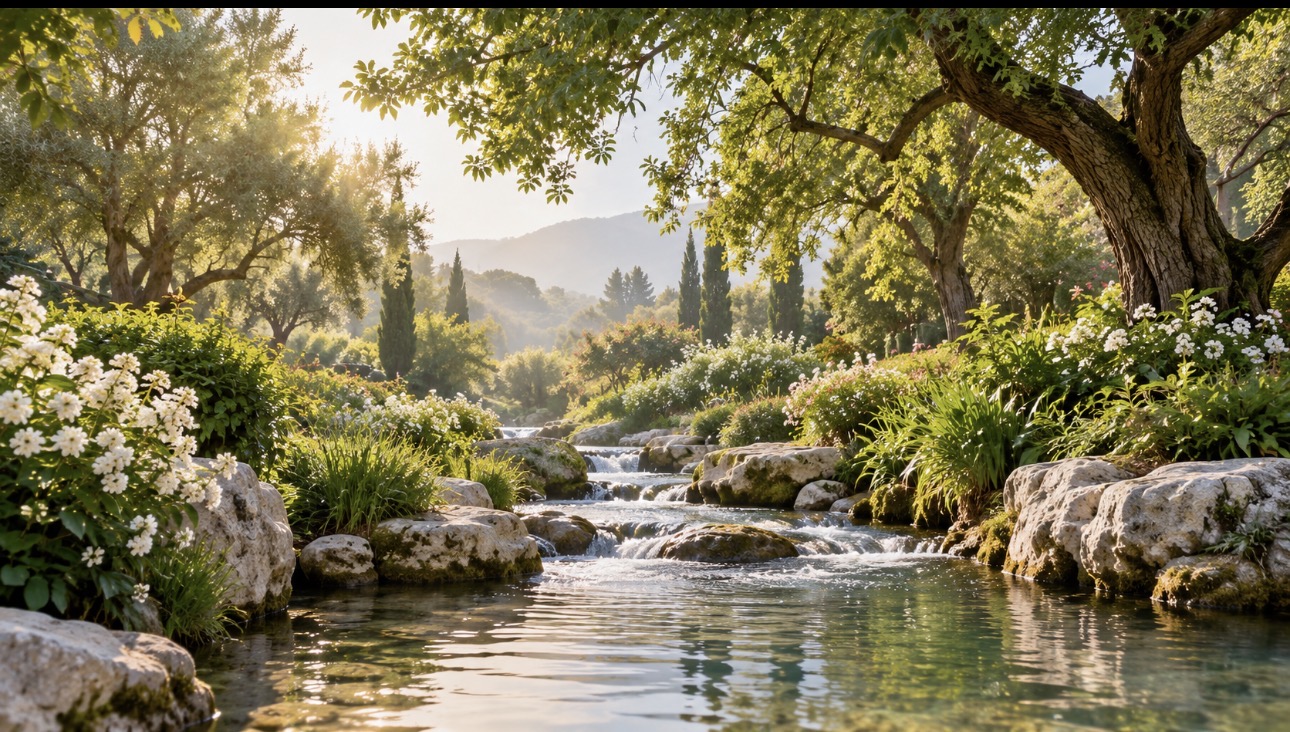
The different names of Jannah: What do they mean?
When we read the Quran and Sunnah, we encounter different names and descriptions of Jannah: Jannaat ʿAdn, al-Firdaws, Jannaat al-Naʿīm, Daar al-Salaam and others. Each opens a window onto the home Allah has prepared for His believing servants.
Some names draw our attention to its permanence, others to its peace, security or delight. Alongside them are descriptions of its ranks, lofty chambers and magnificent dwellings. Understanding how these expressions relate to one another helps us appreciate what Allah has promised and deepens our longing to reach it.
The names do not necessarily refer to separate levels. Their meanings often overlap, describing different qualities of Paradise. Al-Firdaws, however, is specifically distinguished in the Sunnah as its highest part.
Jannah: the garden concealed from our sight
The word Jannah — جَنَّة comes from the Arabic root ج ن ن, which conveys covering or concealment. A garden is called a jannah because its trees and foliage cover and shade the ground.
We find this meaning in other words from the same root. A janīn is a child concealed in the womb, while the jinn are ordinarily hidden from our sight. Majnūn also belongs to this family of words and is traditionally explained in connection with reason being obscured or “covered”. These words share a root, although each has its own meaning.
Classical lexicographers also connect the name of Paradise with its delights being concealed from us in this life. Allah has told us something of what awaits, while its full reality remains beyond our experience:
فَلَا تَعْلَمُ نَفْسٌ مَا أُخْفِيَ لَهُمْ مِنْ قُرَّةِ أَعْيُنٍ جَزَاءً بِمَا كَانُوا يَعْمَلُونَ
“No soul knows what has been hidden for them of delights that will bring joy to their eyes, as a reward for what they used to do.”
Surat al-Sajdah, 32:17.
We know what gardens, rivers and pearls are in this world. Through these familiar words, we are given glimpses of blessings whose true beauty we have yet to discover.
Are heaven and Paradise the same thing?
Before exploring the names of Jannah, it helps to clarify the word “heaven”. In everyday English, it often means Paradise. In translations of the Quran, however, it can also refer to the samaaʾ, meaning sky or heaven, whose plural is samawaat.
Allah says:
الَّذِي خَلَقَ سَبْعَ سَمَاوَاتٍ طِبَاقًا
“He is the One who created seven heavens in layers.”
Surat al-Mulk, 67:3.
He also says:
وَلَقَدْ زَيَّنَّا السَّمَاءَ الدُّنْيَا بِمَصَابِيحَ
“We have indeed adorned the nearest heaven with lamps.”
Surat al-Mulk, 67:5.
The seven heavens are distinct from the degrees of Jannah. Using “Jannah” or “Paradise” for the believers’ everlasting home helps us keep these meanings clear.
Jannaat ʿAdn: the Gardens of Everlasting Residence
One of the recurring descriptions of Paradise is Jannāt ʿAdn — جَنَّاتُ عَدْنٍ. The word ʿAdn conveys settling and remaining in a place. It directs our attention to Jannah as a permanent home.
Allah Almighty says:
جَنَّاتُ عَدْنٍ يَدْخُلُونَهَا وَمَنْ صَلَحَ مِنْ آبَائِهِمْ وَأَزْوَاجِهِمْ وَذُرِّيَّاتِهِمْ وَالْمَلَائِكَةُ يَدْخُلُونَ عَلَيْهِمْ مِنْ كُلِّ بَابٍ
“Gardens of everlasting residence, which they will enter together with the righteous among their parents, spouses and descendants. The angels will enter upon them from every gate.”
Surat al-Raʿd, 13:23.
Ibn Kathir explains ʿAdn in terms of continuous residence. Many scholars understand it as a description of Paradise’s everlasting nature, while some commentators understand it to refer to a particular, distinguished region within it.
The sense of permanence is deeply reassuring. We spend much of our lives establishing homes and seeking stability, yet our circumstances can change at any moment. Jannāt ʿAdn is a home from which its inhabitants will never be displaced.
The verse also gives us hope of sharing that home with righteous loved ones. We want goodness for our families here, and we ask Allah to guide us together and reunite us in the Hereafter.
Jannat al-Khuld: the Garden of Eternity
The promise of permanence is expressed again in Jannat al-Khuld — جَنَّةُ الْخُلْدِ, the Garden of Eternity:
قُلْ أَذَٰلِكَ خَيْرٌ أَمْ جَنَّةُ الْخُلْدِ الَّتِي وُعِدَ الْمُتَّقُونَ كَانَتْ لَهُمْ جَزَاءً وَمَصِيرًا لَهُمْ فِيهَا مَا يَشَاءُونَ خَالِدِينَ كَانَ عَلَىٰ رَبِّكَ وَعْدًا مَسْئُولًا
“Say: ‘Is that better, or the Garden of Eternity promised to those mindful of Allah, which will be their reward and final destination? They will have whatever they wish for there, remaining forever. This is a promise from your Lord, to be asked of Him.’”
Surat al-Furqan, 25:15–16.
The meanings of ʿAdn and Khuld complement one another. ʿAdn emphasises being settled in a lasting home; Khuld emphasises that its life and blessings never end.
The Prophet ﷺ explained what this means for its inhabitants when he described the announcement they will hear:
إِنَّ لَكُمْ أَنْ تَصِحُّوا فَلَا تَسْقَمُوا أَبَدًا، وَإِنَّ لَكُمْ أَنْ تَحْيَوْا فَلَا تَمُوتُوا أَبَدًا، وَإِنَّ لَكُمْ أَنْ تَشِبُّوا فَلَا تَهْرَمُوا أَبَدًا، وَإِنَّ لَكُمْ أَنْ تَنْعَمُوا فَلَا تَبْتَئِسُوا أَبَدًا
“You will remain healthy and never become ill. You will live and never die. You will remain young and never grow old. You will enjoy bliss and never suffer misery.”
Sahih Muslim.
Their happiness will never be overshadowed by the prospect of illness, ageing or death. They will enjoy their blessings with the certainty that they will endure.
Dar al-Muqaamah: the Abode of Lasting Residence
This sense of finally reaching home is beautifully expressed in Daar al-Muqaamah — دَارُ الْمُقَامَةِ. Allah records the gratitude of the people of Paradise:
وَقَالُوا الْحَمْدُ لِلَّهِ الَّذِي أَذْهَبَ عَنَّا الْحَزَنَ إِنَّ رَبَّنَا لَغَفُورٌ شَكُورٌ الَّذِي أَحَلَّنَا دَارَ الْمُقَامَةِ مِنْ فَضْلِهِ لَا يَمَسُّنَا فِيهَا نَصَبٌ وَلَا يَمَسُّنَا فِيهَا لُغُوبٌ
“They will say: ‘Praise belongs to Allah, who has removed sorrow from us. Our Lord is indeed All-Forgiving, Most Appreciative. Through His grace, He has settled us in the Abode of Lasting Residence, where neither fatigue nor weariness touches us.’”
Surat Fatir, 35:34–35.
Their words convey the relief of having arrived. The burdens they carried have been lifted, their sorrow has been removed and their exhaustion has ended. They recognise that Allah has brought them to this home through His favour.
For anyone who has felt worn down by the demands of the dunya, this name offers hope: there is a home in which we will finally be at rest.
Dar al-Salam: the Abode of Peace
Alongside permanence and rest comes peace. Allah calls Paradise Daar al-Salaam — دَارُ السَّلَامِ:
وَاللَّهُ يَدْعُو إِلَىٰ دَارِ السَّلَامِ وَيَهْدِي مَنْ يَشَاءُ إِلَىٰ صِرَاطٍ مُسْتَقِيمٍ
“Allah invites to the Abode of Peace and guides whom He wills to a straight path.”
Surat Yunus, 10:25.
This peace reaches into the hearts of its inhabitants. Allah says:
وَنَزَعْنَا مَا فِي صُدُورِهِمْ مِنْ غِلٍّ إِخْوَانًا عَلَىٰ سُرُرٍ مُتَقَابِلِينَ لَا يَمَسُّهُمْ فِيهَا نَصَبٌ وَمَا هُمْ مِنْهَا بِمُخْرَجِينَ
“We will remove whatever resentment is in their hearts. They will be brothers, facing one another upon couches. No exhaustion will touch them there, and they will never be expelled.”
Surat al-Hijr, 15:47–48.
Grudges, envy and hostility will no longer disturb their relationships. They will be at peace with one another, enjoying Allah’s blessings with purified hearts.
This also helps us understand the different ranks in Jannah. We should not imagine its inhabitants comparing their rewards with the resentment that can accompany comparison in this world. The bitterness itself will have been removed.
Maqam Amin: a Secure Station
Closely connected to peace is the description Maqaam Amīn — مَقَامٌ أَمِينٌ, a secure station or dwelling:
إِنَّ الْمُتَّقِينَ فِي مَقَامٍ أَمِينٍ فِي جَنَّاتٍ وَعُيُونٍ
“Indeed, those mindful of Allah will be in a secure dwelling, amid gardens and springs.”
Surat al-Dukhan, 44:51–52.
In the dunya, even comfortable circumstances can be accompanied by worry. We fear losing our health, our home or those we love. This description draws our attention to the complete security of the people of Paradise.
Maqām Amīn describes the nature of their dwelling; it does not identify a separate numbered level.
Jannat al-Maʾwaa: the Garden of Refuge
The theme of security continues in Jannat al-Maʾwaa — جَنَّةُ الْمَأْوَىٰ, the Garden of Refuge or Abode. Maʾwā conveys a place to which one comes for shelter and residence.
In the passage describing the Prophet’s ﷺ vision of Jibril, Allah says:
عِنْدَ سِدْرَةِ الْمُنْتَهَىٰ عِنْدَهَا جَنَّةُ الْمَأْوَىٰ
“At the Lote Tree of the Utmost Boundary, near which is the Garden of Refuge.”
Surat al-Najm, 53:14–15.
The verse places Jannat al-Maʾwā near Sidrat al-Muntahā. Its name adds another dimension to our understanding of Paradise: a home of refuge in which its inhabitants will find lasting shelter.
Jannaat al-Naʿim: the Gardens of Bliss
Having described permanence, peace and security, the Quran also draws our attention to the delight of Paradise through the name Jannaat al-Naʿīm — جَنَّاتُ النَّعِيمِ:
إِنَّ الَّذِينَ آمَنُوا وَعَمِلُوا الصَّالِحَاتِ لَهُمْ جَنَّاتُ النَّعِيمِ خَالِدِينَ فِيهَا وَعْدَ اللَّهِ حَقًّا وَهُوَ الْعَزِيزُ الْحَكِيمُ
“Those who believe and perform righteous deeds will have the Gardens of Bliss, remaining there forever. Allah’s promise is true, and He is the Almighty, the All-Wise.”
Surat Luqman, 31:8–9.
Naʿīm conveys ease, enjoyment and blessing. The people of Jannah will experience an abundance of goodness in a home whose delights endure.
We can now see how the names complement one another. They describe a home in which people are settled, secure, at peace and surrounded by blessings. These qualities belong together.
Al-Firdaws: the Highest Part of Paradise
Among these names, al-Firdaws — الْفِرْدَوْس has a particular distinction. The word evokes a flourishing garden, while the Sunnah identifies al-Firdaws as the highest part of Paradise.
Allah says:
إِنَّ الَّذِينَ آمَنُوا وَعَمِلُوا الصَّالِحَاتِ كَانَتْ لَهُمْ جَنَّاتُ الْفِرْدَوْسِ نُزُلًا خَالِدِينَ فِيهَا لَا يَبْغُونَ عَنْهَا حِوَلًا
“Those who believe and perform righteous deeds will have the Gardens of al-Firdaws as their welcome and lodging. They will remain there forever, never wishing to move elsewhere.”
Surat al-Kahf, 18:107–108.
Their contentment will be complete. They will have no desire to leave or search for somewhere better.
The Prophet ﷺ explained its rank:
فِي الْجَنَّةِ مِائَةُ دَرَجَةٍ، مَا بَيْنَ كُلِّ دَرَجَتَيْنِ كَمَا بَيْنَ السَّمَاءِ وَالْأَرْضِ، وَالْفِرْدَوْسُ أَعْلَاهَا دَرَجَةً، وَمِنْهَا تُفَجَّرُ أَنْهَارُ الْجَنَّةِ الْأَرْبَعَةُ، وَمِنْ فَوْقِهَا يَكُونُ الْعَرْشُ، فَإِذَا سَأَلْتُمُ اللَّهَ فَسَلُوهُ الْفِرْدَوْسَ
“In Paradise there are one hundred degrees. Between every two degrees is a distance like that between heaven and earth. Al-Firdaws is its highest degree; from it spring the four rivers of Paradise, and above it is the Throne. So when you ask Allah, ask Him for al-Firdaws.”
Jamiʿ al-Tirmidhi.
Sahih al-Bukhari also describes al-Firdaws as the central or best part of Paradise and its highest part.
Sahih al-Bukhari.
The instruction to ask for al-Firdaws teaches us to have great hope in Allah. We know our shortcomings, yet the Prophet ﷺ encouraged us to ask for the highest reward. We repent, keep striving and allow that hope to influence our choices.
Darajaat: understanding the degrees of Paradise
The mention of al-Firdaws leads naturally to the question of ranks. Darajaat — دَرَجَات means degrees and describes distinctions of reward within Jannah.
In Sahih al-Bukhari, the Prophet ﷺ says:
إِنَّ فِي الْجَنَّةِ مِائَةَ دَرَجَةٍ أَعَدَّهَا اللَّهُ لِلْمُجَاهِدِينَ فِي سَبِيلِ اللَّهِ، مَا بَيْنَ الدَّرَجَتَيْنِ كَمَا بَيْنَ السَّمَاءِ وَالْأَرْضِ
“In Paradise there are one hundred degrees which Allah has prepared for those who strive in His cause. Between each two degrees is a distance like that between heaven and earth.”
Sahih al-Bukhari.
Another narration describes the elevation of the companion of the Quran:
يُقَالُ لِصَاحِبِ الْقُرْآنِ اقْرَأْ وَارْتَقِ وَرَتِّلْ كَمَا كُنْتَ تُرَتِّلُ فِي الدُّنْيَا، فَإِنَّ مَنْزِلَكَ عِنْدَ آخِرِ آيَةٍ تَقْرَؤُهَا
“The companion of the Quran will be told: ‘Recite and ascend, and recite with care as you used to recite in the worldly life. Your station will be at the last verse you recite.’”
Sunan Abi Dawud.
Scholars have discussed how these narrations relate. Al-Khattabi relates the understanding that the degrees correspond to the verses of the Quran, while Ibn Hajar explains that mentioning one hundred degrees does not necessarily limit the total number to one hundred.
The narrations establish differences of rank, but do not set out a fixed arrangement of one hundred main levels, each containing a specified number of sublevels. We can affirm what has been revealed while recognising the distinction between the texts and scholarly explanations of their arrangement.
For us, the encouragement is to become companions of the Quran: to recite it, learn it, reflect upon it and live by its guidance.
Al-Ghuraf: the lofty chambers within Paradise
The different ranks of Jannah are also reflected in its dwellings. Al-ghuraf — الْغُرَف is the plural of ghurfah, an upper room or chamber. In the descriptions of Paradise, it refers to elevated and magnificent residences.
Allah says:
وَالَّذِينَ آمَنُوا وَعَمِلُوا الصَّالِحَاتِ لَنُبَوِّئَنَّهُمْ مِنَ الْجَنَّةِ غُرَفًا تَجْرِي مِنْ تَحْتِهَا الْأَنْهَارُ خَالِدِينَ فِيهَا نِعْمَ أَجْرُ الْعَامِلِينَ الَّذِينَ صَبَرُوا وَعَلَىٰ رَبِّهِمْ يَتَوَكَّلُونَ
“Those who believe and perform righteous deeds, We will surely settle in chambers of Paradise beneath which rivers flow, remaining there forever. How excellent is the reward of those who work: those who are patient and place their trust in their Lord.”
Surat al-ʿAnkabut, 29:58–59.
He also says:
لَٰكِنِ الَّذِينَ اتَّقَوْا رَبَّهُمْ لَهُمْ غُرَفٌ مِنْ فَوْقِهَا غُرَفٌ مَبْنِيَّةٌ تَجْرِي مِنْ تَحْتِهَا الْأَنْهَارُ وَعْدَ اللَّهِ لَا يُخْلِفُ اللَّهُ الْمِيعَادَ
“Those who are mindful of their Lord will have chambers, with other chambers built above them, beneath which rivers flow. This is Allah’s promise, and Allah does not break His promise.”
Surat al-Zumar, 39:20.
The Prophet ﷺ described how their inhabitants will be seen:
إِنَّ أَهْلَ الْجَنَّةِ يَتَرَاءَيُونَ أَهْلَ الْغُرَفِ مِنْ فَوْقِهِمْ كَمَا يَتَرَاءَيُونَ الْكَوْكَبَ الدُّرِّيَّ الْغَابِرَ فِي الْأُفُقِ مِنَ الْمَشْرِقِ أَوِ الْمَغْرِبِ، لِتَفَاضُلِ مَا بَيْنَهُمْ
“The people of Paradise will see the inhabitants of the chambers above them as they see a brilliant star far away on the eastern or western horizon, because of the difference in their ranks.”
The Companions asked whether these were the dwellings of prophets, unattainable by others. He ﷺ replied:
بَلَى وَالَّذِي نَفْسِي بِيَدِهِ، رِجَالٌ آمَنُوا بِاللَّهِ وَصَدَّقُوا الْمُرْسَلِينَ
“Indeed, others can attain them. By the One in whose hand is my soul: people who believed in Allah and affirmed the truth of the messengers.”
Sahih al-Bukhari.
The ghuraf are therefore dwellings of elevated rank within Paradise. The narrations do not require us to place all of them in one fixed band beneath al-Firdaws.
Who are the lofty chambers for?
The Prophet ﷺ connected these beautiful dwellings with qualities we can cultivate in our daily lives:
إِنَّ فِي الْجَنَّةِ غُرَفًا تُرَى ظُهُورُهَا مِنْ بُطُونِهَا وَبُطُونُهَا مِنْ ظُهُورِهَا
“In Paradise there are chambers whose outsides can be seen from within and whose insides can be seen from outside.”
A Bedouin asked:
لِمَنْ هِيَ يَا رَسُولَ اللَّهِ؟
“Who are they for, O Messenger of Allah?”
He ﷺ replied:
لِمَنْ أَطَابَ الْكَلَامَ وَأَطْعَمَ الطَّعَامَ وَأَدَامَ الصِّيَامَ وَصَلَّى لِلَّهِ بِاللَّيْلِ وَالنَّاسُ نِيَامٌ
“For those who speak kindly, provide food, fast regularly and pray to Allah at night while people are asleep.”
Jamiʿ al-Tirmidhi.
Kind speech, generosity, fasting and night prayer bring together our relationship with Allah and our treatment of others. The way we speak when irritated, the food we share and the worship we offer in private are all opportunities to prepare for that home.
Pearl pavilions: magnificent dwellings
Alongside the lofty chambers, the Sunnah describes khiyām — خِيَام, tents or pavilions of extraordinary beauty.
The Prophet ﷺ said:
إِنَّ لِلْمُؤْمِنِ فِي الْجَنَّةِ لَخَيْمَةً مِنْ لُؤْلُؤَةٍ وَاحِدَةٍ مُجَوَّفَةٍ، طُولُهَا سِتُّونَ مِيلًا، لِلْمُؤْمِنِ فِيهَا أَهْلُونَ، يَطُوفُ عَلَيْهِمُ الْمُؤْمِنُ فَلَا يَرَى بَعْضُهُمْ بَعْضًا
“The believer will have in Paradise a pavilion made from a single hollow pearl, sixty miles in extent. Within it will be members of his household whom he visits, without them seeing one another.”
Sahih Muslim.
Like the ghuraf, these pavilions are dwellings within Paradise. The narration does not assign them specifically to its lowest rank. Their description gives us another glimpse of how far the blessings of Jannah exceed our earthly experience.
The reward of the lowest-ranking inhabitant
The immensity of these dwellings may make us wonder what awaits someone at the lowest rank. The Prophet ﷺ described the last person to enter Paradise, who imagines that it is already full. Allah tells him:
اذْهَبْ فَادْخُلِ الْجَنَّةَ، فَإِنَّ لَكَ مِثْلَ الدُّنْيَا وَعَشَرَةَ أَمْثَالِهَا، أَوْ إِنَّ لَكَ عَشَرَةَ أَمْثَالِ الدُّنْيَا
“Go and enter Paradise. You will have the equivalent of the world and ten times its like”—or, as transmitted in the alternative wording—“you will have ten times the equivalent of the world.”
Sahih Muslim.
The report identifies this as the lowest rank among the inhabitants of Paradise. It describes the reward of one person, rather than the dimensions of the entire lowest level.
Even this reward exceeds everything we could possess in the dunya. Knowing this should expand our hope in Allah’s generosity.
Tuba tree in Paradise
The vastness of Jannah is also reflected in its trees. Among the names we encounter is Tuba — طُوبَىٰ, described in a narration as a tree within Paradise:
طُوبَى شَجَرَةٌ فِي الْجَنَّةِ، مَسِيرَةُ مِائَةِ عَامٍ، ثِيَابُ أَهْلِ الْجَنَّةِ تَخْرُجُ مِنْ أَكْمَامِهَا
“Tuba is a tree in Paradise extending over a journey of one hundred years. The garments of the people of Paradise emerge from its buds.”
Ahmad and Ibn Hibbani.
The Prophet ﷺ also described a tree of immense shade:
إِنَّ فِي الْجَنَّةِ لَشَجَرَةً يَسِيرُ الرَّاكِبُ فِي ظِلِّهَا مِائَةَ عَامٍ لَا يَقْطَعُهَا
“In Paradise there is a tree in whose shade a rider could travel for one hundred years without crossing it.”
Sahih al-Bukhari.
This second narration does not name the tree. Both descriptions convey something of the wonder of Paradise, while the narration naming Ṭūbā identifies it as a tree, rather than a separate level.
Understanding how the descriptions fit together
By bringing these expressions together, we can see that they describe different aspects of Jannah. Names such as Jannaat ʿAdn, Daar al-Salaam and Jannaat al-Naʿīm draw our attention to its permanence, peace and delight. Al-Firdaws is distinguished by its supreme rank, while darajaat describes degrees of reward. The ghuraf and pearl pavilions are dwellings within Paradise, and Tuba is a tree within it.
These descriptions enrich our understanding without giving us a complete map of the unseen. They tell us enough to awaken our longing and encourage our efforts, while leaving the full reality of Allah’s promise for us to discover.
Entering through Allah’s mercy
As our longing for Jannah grows, we should remember how we hope to reach it. The Prophet ﷺ said:
لَنْ يُدْخِلَ أَحَدًا عَمَلُهُ الْجَنَّةَ
“No one’s deeds will, by themselves, admit him to Paradise.”
The Companions asked:
وَلَا أَنْتَ يَا رَسُولَ اللَّهِ؟
“Not even you, O Messenger of Allah?”
He ﷺ replied:
لَا، وَلَا أَنَا إِلَّا أَنْ يَتَغَمَّدَنِي اللَّهُ بِفَضْلٍ وَرَحْمَةٍ، فَسَدِّدُوا وَقَارِبُوا
“No, not even me, unless Allah envelops me in His favour and mercy. So strive to do what is right and come as close to it as you can.”
Sahih al-Bukhari.
We strive sincerely, repent when we fall short and ask Allah to accept our efforts. The promise of Jannah should encourage us to improve, while keeping us humble and conscious of our dependence upon Him.
The greatest blessing: Allah’s pleasure and seeing Him
All these names describe a home of extraordinary goodness. Yet when Allah mentions its gardens and beautiful dwellings, He directs our hearts towards something greater:
وَعَدَ اللَّهُ الْمُؤْمِنِينَ وَالْمُؤْمِنَاتِ جَنَّاتٍ تَجْرِي مِنْ تَحْتِهَا الْأَنْهَارُ خَالِدِينَ فِيهَا وَمَسَاكِنَ طَيِّبَةً فِي جَنَّاتِ عَدْنٍ وَرِضْوَانٌ مِنَ اللَّهِ أَكْبَرُ ذَٰلِكَ هُوَ الْفَوْزُ الْعَظِيمُ
“Allah has promised believing men and women gardens beneath which rivers flow, where they will remain forever, and beautiful dwellings in Gardens of Everlasting Residence. Yet Allah’s pleasure is greater. That is the tremendous triumph.”
Surat al-Tawbah, 9:72.
The Prophet ﷺ described the joy awaiting the people of Paradise when they see their Lord:
إِذَا دَخَلَ أَهْلُ الْجَنَّةِ الْجَنَّةَ، يَقُولُ اللَّهُ تَبَارَكَ وَتَعَالَى: تُرِيدُونَ شَيْئًا أَزِيدُكُمْ؟ فَيَقُولُونَ: أَلَمْ تُبَيِّضْ وُجُوهَنَا؟ أَلَمْ تُدْخِلْنَا الْجَنَّةَ وَتُنَجِّنَا مِنَ النَّارِ؟ قَالَ: فَيَكْشِفُ الْحِجَابَ، فَمَا أُعْطُوا شَيْئًا أَحَبَّ إِلَيْهِمْ مِنَ النَّظَرِ إِلَى رَبِّهِمْ عَزَّ وَجَلَّ
“When the people of Paradise enter Paradise, Allah, Blessed and Exalted, will say: ‘Would you like Me to give you something more?’ They will say: ‘Have You not brightened our faces? Have You not admitted us to Paradise and saved us from the Fire?’ Then He will lift the veil, and nothing they have been given will be dearer to them than looking upon their Lord, Mighty and Majestic.”
Sahih Muslim.
After believing in Him without seeing Him, calling upon Him through difficulty and returning to Him despite their mistakes, they will receive this greatest joy.
May Allah make us people of the Quran, purify our hearts and beautify our character. May He admit us, our parents, our families and those we love into al-Firdaws al-Aʿla through His mercy. May He grant us His everlasting pleasure and the joy of looking upon Him. Ameen.o al-Firdaws al-Aʿla. May He grant us His everlasting pleasure and the joy of looking upon Him. Ameen.
https://www.utrujj.org/the-day-of-resurrection-9-paradise-at-last/