
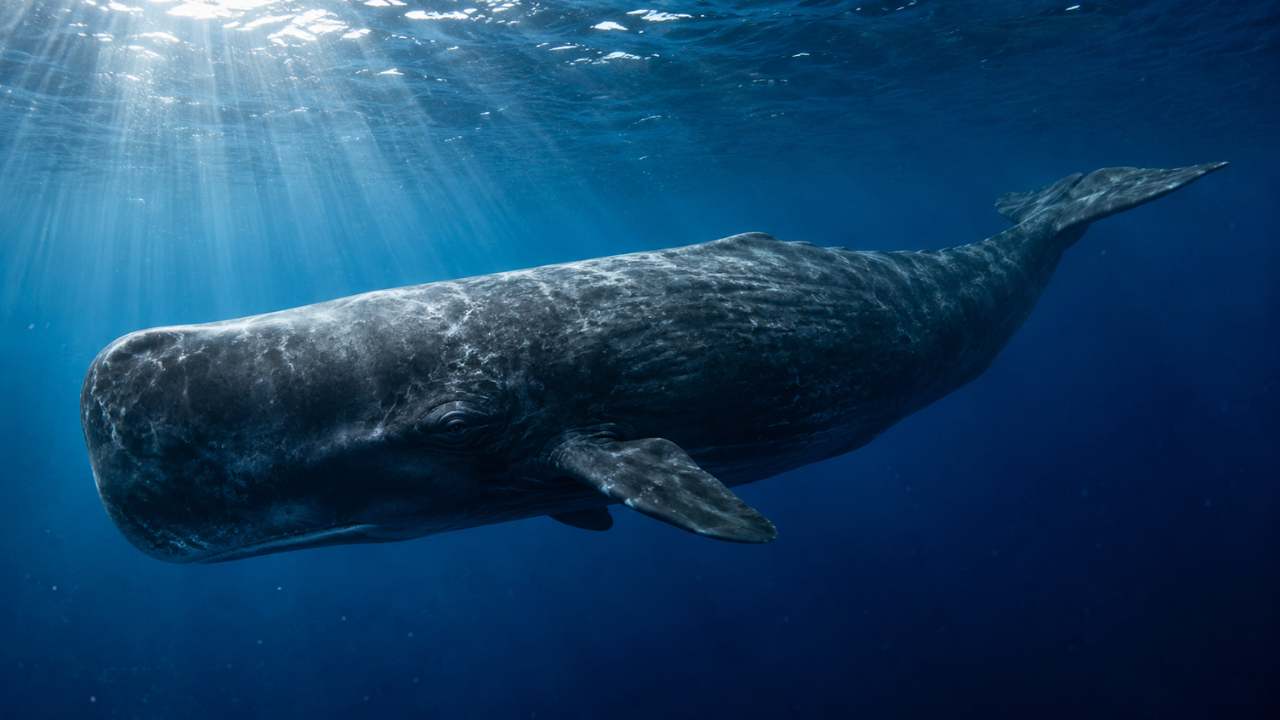
The belly of the whale and the dark night of the soul
There are so many things to reflect on in the story of Prophet Yunus (peace be upon him).
The first is that his ordeal took place at night, and there is something about the loneliness of the night. People sometimes call it “the dark night of the soul”: that quiet, difficult journey which happens when everything familiar has fallen away and a person is left alone with themselves.
This is often when people fall into depression. There can be a painful gap between where you wanted to be and where you actually find yourself. Everyone else seems to be moving on, while you feel that you have been left behind. You look around and think, “How did I end up here?”
Prophet Yunus (peace be upon him) was thrown overboard at night. His circumstances had moved beyond his control, and he found himself in a place he had never intended to be.
When the world collapses on you
Sometimes this happens in life. A situation overtakes you, the world seems to collapse around you and suddenly you are travelling through something you never chose. You are doing it alone, you cannot see where you are going and everybody else seems to have disappeared.
Prophet Yunus (peace be upon him) was literally in no man’s land. He was in the middle of the sea. There was the darkness of the night, the darkness of the ocean and the darkness of the belly of the whale. Everything around him had closed in.
Coming to know yourself and Allah
In Islamic writings, the ocean is used a great deal as a metaphor – a place of boundless depth and ma‘rifah, which is the concept of coming to know Allah. It is often through a trial that you come to know yourself properly. You discover what you are made of, where your weaknesses are and what your relationship with Allah is really like.
Prophet Yunus (peace be upon him) was swallowed and taken down into the depths. He reached what we might call rock bottom. He experienced isolation, loneliness and the collapse of everything around him.
There is also the idea of qabd and bast: constriction and expansion. At that point, everything was constricted. The world around him had become tiny and he himself is minimalised. His movement was restricted and his options had disappeared. He could not physically do anything to change his situation. Even if he had the intention to act, he did not have the capacity.
This state of wanting to act but being unable to do so is something the Prophet ﷺ taught us to seek refuge from. He used to say:
اللَّهُمَّ إِنِّي أَعُوذُ بِكَ مِنَ الْهَمِّ وَالْحَزَنِ، وَالْعَجْزِ وَالْكَسَلِ
“O Allah, I seek refuge with You from worry and grief, incapacity and laziness.”
(Sahih al-Bukhari)
The dua places worry, grief and incapacity beside one another. Emotional distress can drain a person until even simple actions feel beyond them. The answer is not to condemn the person for their weakness, but to seek refuge in Allah and begin moving again through whatever small means remain available.
One of the ways a person begins to emerge from shock is by grounding themselves. They become aware of their body, their surroundings and the fact that they are still here. Although Prophet Yunus (peace be upon him) had to feel around him and figure out where he was. He could not control the whale, the sea or the darkness, he could still turn to Allah.
When someone experiences extreme stress, loneliness or collapse, the body can also begin to suffer. The appetite goes, the digestive system is affected and even personal care can disappear. A person may feel as though they are being eaten from the inside out.
There is therefore something striking about Prophet Yunus (peace be upon him) being inside the belly of the whale. The whole experience is one of being swallowed by the crisis.
Rock bottom is not always the end – it is a springboard
Prophet Yunus (peace be upon him) went right to the bottom, and you cannot go any lower than rock bottom. People often see rock bottom as the worst possible place to be, but sometimes it becomes a springboard. Once you have reached the bottom of the curve, the only direction left is upwards. Many people begin to change when they reach that point. They acknowledge what has happened, accept responsibility, make amends and start again.
This is what Prophet Yunus (peace be upon him) did. Allah says:
وَذَا ٱلنُّونِ إِذ ذَّهَبَ مُغَـٰضِبًۭا فَظَنَّ أَن لَّن نَّقْدِرَ عَلَيْهِ فَنَادَىٰ فِى ٱلظُّلُمَـٰتِ أَن لَّآ إِلَـٰهَ إِلَّآ أَنتَ سُبْحَـٰنَكَ إِنِّى كُنتُ مِنَ ٱلظَّـٰلِمِينَ
“And remember the Man of the Whale, when he went off angrily, thinking We would not restrain him. Then in the darkness he cried out, ‘There is no god except You. Glory be to You. Indeed, I have been among the wrongdoers.’”
(Surat al-Anbiya, 21:87)
What is remarkable is that Prophet Yunus (peace be upon him) did not dictate the form his rescue should take. He did not say, “Take me out of the whale,” or, “Return me immediately to the shore.” But this does not mean that he was not asking Allah for help. His words were themselves a dua. They contained tawhid, tasbih, repentance and complete surrender. It was as though he was saying, “You are my Lord. I do not know what the solution should be, but You do. I acknowledge my mistake and leave myself entirely in Your care.”
This is very important because sometimes we do not know what rescue should look like. Prophet Yunus (peace be upon him) could have asked to be released, but released where? If the whale had simply opened its mouth while deep beneath the ocean, he might have been exposed to even greater danger. You do not always know whether you are trapped or being protected.
From one angle, the whale was harming him. From another angle, it was also carrying him. It was like a vessel or a submarine transporting him from where he had fallen to where Allah wanted him to arrive. What felt like a prison was also a means of preservation.
This is one of the great lessons of the story. You may think something is destroying you, while Allah is using it to transport you. You may think you have been abandoned, while Allah is preserving you in a way you cannot yet understand. The moment is painful, but it is not necessarily the end of the story.
Allah immediately tells us what happened after Prophet Yunus (peace be upon him) called upon Him:
فَٱسْتَجَبْنَا لَهُۥ وَنَجَّيْنَـٰهُ مِنَ ٱلْغَمِّ ۚ وَكَذَٰلِكَ نُـۨجِى ٱلْمُؤْمِنِينَ
“So We answered him and saved him from distress. And so We save the believers.”
(Surat al-Anbiya, 21:88)
The verse takes the story beyond Prophet Yunus (peace be upon him). Allah does not simply say, “We saved him.” He adds, “And so We save the believers.” His experience therefore becomes a source of hope for everyone who calls upon Allah from within their own darkness.
The Prophet ﷺ said:
“The supplication of Dhun-Nun when he called upon Allah from inside the whale was: ‘There is no god except You. Glory be to You. Indeed, I have been among the wrongdoers.’ No Muslim supplicates with it concerning anything except that Allah responds to him.”
(Jami‘ at-Tirmidhi, 3505; graded sahih)
The dua of Prophet Yunus (peace be upon him) is therefore not only part of his story. It is a dua for every believer who feels trapped, overwhelmed or unable to see a way forward.
How long was he there?
The Qur’an does not tell us how long Prophet Yunus (peace be upon him) remained inside the whale. Different periods have been mentioned in later accounts. Some say part of a day, some say three days and others mention longer periods, but the Qur’an does not specify. Perhaps there is something in that as well.
When you are in pain, every minute can feel like an eternity. When you are happy and completely absorbed in something, time passes very quickly. People sometimes refer to this experience as time dilation. The point is therefore not necessarily how many hours Prophet Yunus (peace be upon him) spent there. The point is how it felt. He was in an extremely intense and frightening situation.
Perhaps he was not there for as long as people imagine. The whale may simply have carried him from one place to another, taking him where he needed to be. Again, what looked like a disaster may also have been the journey.
Facing the monster within
In modern psychological readings, the belly of the whale is sometimes used as an image for the subconscious, and the hidden parts of the self – the anger, fear and unresolved struggles which a person does not want to face. This is the beast within. It is a symbolic reflection of running away from your troubles, eventually they may swallow you.
You cannot overcome something you refuse to face. At some point, you have to stop, acknowledge it, turn to Allah and take responsibility. There is also an interesting reflection about anger. Prophet Yunus (peace be upon him) left his people while angry. Normally, a person is told to swallow their anger. He did not swallow his anger at that moment, and then he was swallowed by something bigger than himself. Again, this is a reflection rather than an established interpretation, but it is one of the many striking metaphors which can be drawn from the story.
From constriction to expansion
Allah eventually commanded the whale to release Prophet Yunus (peace be upon him). The Qur’an describes the condition in which he reached the shore:
فَنَبَذْنَـٰهُ بِٱلْعَرَآءِ وَهُوَ سَقِيمٌۭ وَأَنۢبَتْنَا عَلَيْهِ شَجَرَةًۭ مِّن يَقْطِينٍۢ
“We cast him onto the open shore while he was unwell, and caused a squash plant to grow over him.”
(Surat as-Saffat, 37:145–146)
There is something very gentle in this part of the story. Allah did not simply bring him out and leave him there. Prophet Yunus (peace be upon him) needed recovery. He needed shade, nourishment, rest and time.
This also connects to what can help a person emerge from depression and isolation. They need to acknowledge what they have been through and gradually reconnect with their body and surroundings. They may need movement, sunlight, fresh air, nourishing food and contact with the natural world. These things sound simple, but they matter. Being surrounded by scenery evokes feelings of the awe and majesty of Allah, and tasbih spills out of one’s heart.
Prophet Yunus (peace be upon him) moved from the constriction of the whale to the openness of the shore, from darkness to light, from the depths to the surface and from complete incapacity to gradual recovery. Allah brought him out, but He also gave him what he needed afterwards.
Recovery does not always happen in one dramatic moment. Sometimes Allah brings a person back gently.
Leaving the crisis may only be the beginning. A person may still be exhausted, vulnerable and in need of restoration. Allah knew that Prophet Yunus (peace be upon him) needed shelter, nourishment and time before he could return to his mission.
Connecting to the highest place from the lowest point
There is a meaningful parallel here with the experience of Prophet Muhammad ﷺ. When he was asked about one of the most difficult days of his life, he mentioned the rejection and abuse he suffered at Ta’if. He had been insulted and pelted with stones. Yet at that lowest moment, when he was offered the destruction of the people, he refused. He hoped that their descendants would worship Allah. That painful period was followed by expansion. The Night Journey and Ascension came afterwards, and later Allah opened Madinah to him.
You see the same pattern: the lowest moment on earth becomes connected to the highest spiritual opening. Prophet Yunus (peace be upon him) was physically at the lowest point, deep beneath the sea, yet his dua rose to Allah. This tells us that even in the most desperate situation, you are never far from Him. Allah sees you and Allah hears you. Even if all you can manage is a whisper or a murmur from the bottom of your heart, He hears it.
Allah says:
فَلَوْلَآ أَنَّهُۥ كَانَ مِنَ ٱلْمُسَبِّحِينَ لَلَبِثَ فِى بَطْنِهِۦٓ إِلَىٰ يَوْمِ يُبْعَثُونَ
“Had he not been among those who glorified Allah, he would have remained inside it until the Day they are resurrected.”
(Surat as-Saffat, 37:143–144)
The verse directly connects his deliverance with his tasbih and remembrance of Allah. His relationship with Allah was not created by the crisis. The crisis revealed the relationship he had already built. This recalls the teaching of the Prophet ﷺ:
“Know Allah in times of ease, and He will know you in times of hardship.”
(Jami‘ at-Tirmidhi)
His remembrance of Allah did not begin inside the whale. He had known Allah before the crisis came. That previous worship became a means of deliverance.
This is why we should build our relationship with Allah in times of ease. The good deeds you perform now may become the thing that supports you when everything else falls away. The prayers, duas and quiet moments of remembrance which seem small today may become a source of strength during the darkest night.
Your mistake does not have to define you
The story does not end with Prophet Yunus (peace be upon him) simply escaping from the whale. Allah says:
فَٱجْتَبَـٰهُ رَبُّهُۥ فَجَعَلَهُۥ مِنَ ٱلصَّـٰلِحِينَ
“Then his Lord chose him and made him one of the righteous.”
(Surat al-Qalam, 68:50)
He was not defined forever by the moment in which he left his people. He acknowledged his mistake, returned to Allah and was chosen again. This is perhaps one of the most hopeful lessons in the story. A mistake does not have to become your permanent identity. Your lowest moment does not have to be the final chapter. It teaches us that what feels like the end may actually be a turning point. What appears to be imprisoning you may be carrying you. What seems to be rock bottom may become the place from which you rise. And even in the deepest darkness, the door to Allah remains open.