
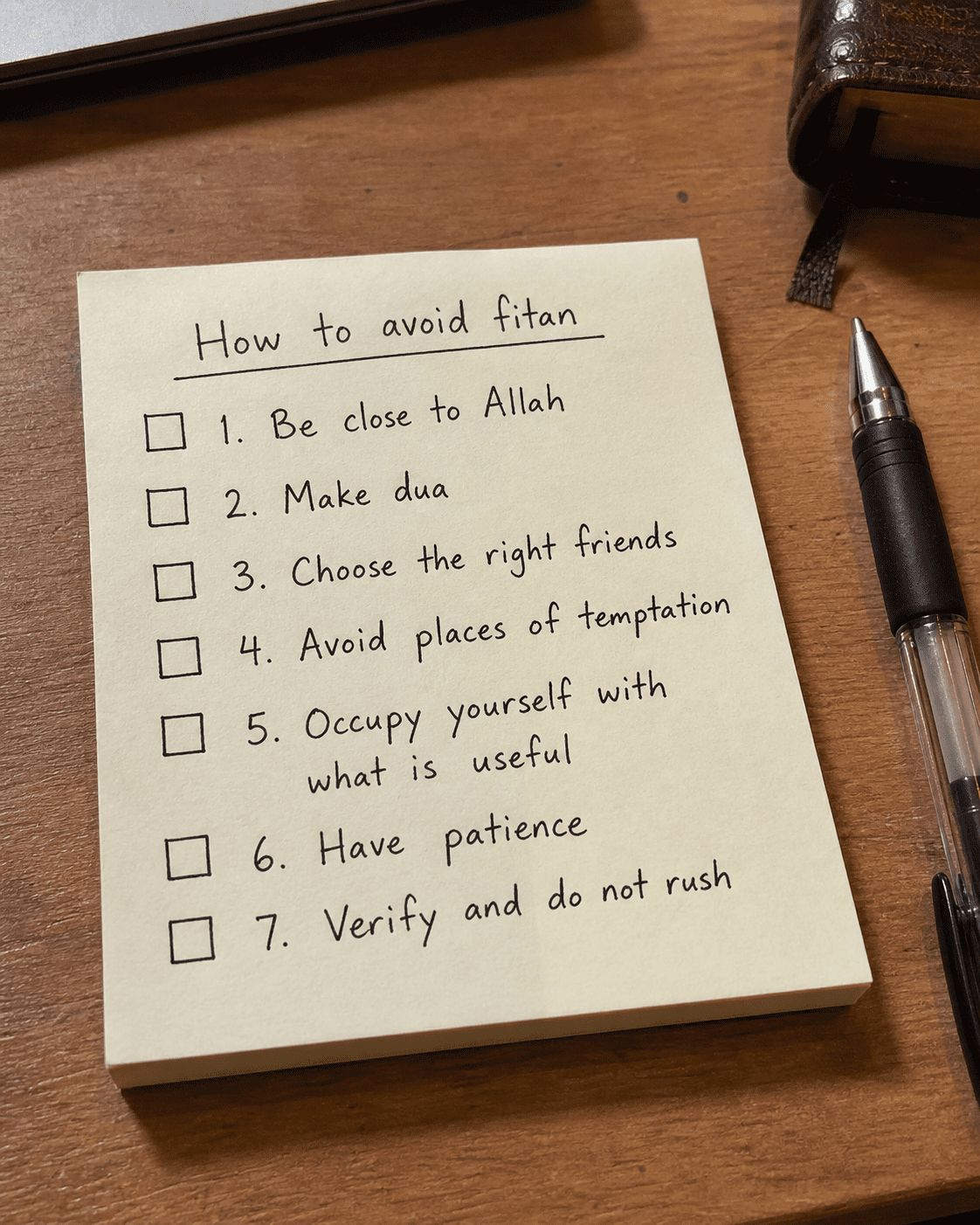
How to successfully survive times of trial
Who is the lucky one?
عَنِ الْمِقْدَادِ بْنِ الْأَسْوَدِ قَالَ : ايْمُ اللَّهِ، لَقَدْ سَمِعْتُ رَسُولَ اللَّهِ صَلَّى اللَّهُ عَلَيْهِ وَسَلَّمَ يَقُولُ : ” إِنَّ السَّعِيدَ لَمَنْ جُنِّبَ الْفِتَنَ، إِنَّ السَّعِيدَ لَمَنْ جُنِّبَ الْفِتَنَ، إِنَّ السَّعِيدَ لَمَنْ جُنِّبَ الْفِتَنَ، وَلَمَنِ ابْتُلِيَ فَصَبَرَ فَوَاهًا “. أبو داود.
Al-Miqdad ibn al-Aswad (may Allah be pleased with him) said: “By Allah, I heard the Messenger of Allah ﷺ say, ‘Indeed, the fortunate one is the one who is kept away from trials. Indeed, the fortunate one is the one who is kept away from trials. Indeed, the fortunate one is the one who is kept away from trials. And whoever is tested and remains patient, how excellent he is.’” (Abu Dawud)
In this hadith, the Prophet ﷺ repeated the description of the truly fortunate person (as- sa’eed) three times. He did not define happiness as wealth, status, fame, comfort, or popularity. Rather, he said that the truly fortunate person is the one whom Allah protects from fitan.
Fitan are trials, tribulations, temptations and forms of confusion that shake people’s faith, judgment and stability. Some fitan are obvious, but others are not. A person may think he is not being tested while he is.
This is why many major books of hadith contain chapters on fitan. The Prophet ﷺ warned us about them because they are not always easy to recognize when we are inside them.
Ibn al-Qayyim al Jawziyya (may Allah have mercy on him) said:
الفتنة نوعان: فتنة الشبهات ، وهي أعظم الفتنتين ، وفتنة الشهوات.وقد يجتمعان للعبد ، وقد ينفرد بإحداهما.
“Trials are of two types: the trial of doubts, and this is the more severe of the two; and the trial of desires. They may both come together for a person, or he may be afflicted by only one of them.”
The first type is fitnat al-shubuhat, the trial of doubts. This arises from weak understanding, lack of knowledge, confusion, misinformation, or exposure to arguments that one is not equipped to answer. This can lead a person to misguidance, innovation, or even disbelief. The antidote to this is sound knowledge, certainty (yaqeen), and holding firmly to the teachings of the Prophet ﷺ.
The second type is fitnat al-shahawat, the trial of desires. This is when a person knows what is right, but follows the ego, temptation, lust, anger, greed, popularity. It is following worldly pleasures against what one knows is right, leading to sinful actions. The antidote to this is patience (ṣabr) and self-control. Ibn Qayyim concludes that true guidance and leadership in religion are achieved through certainty and patience, as indicated in Surat as-Sajdah:
وَجَعَلْنَا مِنْهُمْ أَئِمَّةً يَهْدُونَ بِأَمْرِنَا لَمَّا صَبَرُوا وَكَانُوا بِآيَاتِنَا يُوقِنُونَ
“And We made from among them leaders guiding by Our command when they were patient and had certainty in Our signs.” (Surat as-Sajdah, 32:24)
This ayah brings the cure together: patience and certainty. Certainty protects a person from doubts, and patience protects a person from desires.
Hudhayfah ibn al-Yaman (may Allah be pleased with him) had a special concern for fitan. He said:
كَانَ النَّاسُ يَسْأَلُونَ رَسُولَ اللَّهِ ﷺ عَنِ الْخَيْرِ، وَكُنْتُ أَسْأَلُهُ عَنِ الشَّرِّ مَخَافَةَ أَنْ يُدْرِكَنِي
“People used to ask the Messenger of Allah ﷺ about good, but I used to ask him about evil, fearing that it might overtake me.” (Bukhari and Muslim)
This does not mean that we become obsessed with evil, but that we are not naive. A believer should know the paths that lead to harm so that he can avoid them.
How can we avoid the waves of fitan?
1. Be close to Allah
Allah says in Surat Al Imran:
وَمَنْ يَعْتَصِمْ بِاللَّهِ فَقَدْ هُدِيَ إِلَىٰ صِرَاطٍ مُسْتَقِيمٍ
“And whoever holds fast to Allah has surely been guided to a straight path.” (Surat Al Imran, 3:101)
The waves of fitan are strong. If a person relies only on his intelligence, confidence, strength, or background, he may drown. But whoever holds fast to Allah is given direction.
Being close to Allah means strengthening salah, reciting the Qur’an, making dhikr, learning the religion, keeping good company, and returning to Allah quickly after mistakes. The more a person understands the religion, the easier it becomes to distinguish truth from falsehood, and guidance from misguidance.
2. Make dua for protection
The Prophet ﷺ taught the companions to seek refuge from fitan. In Sahih Muslim, he said:
تَعَوَّذُوا بِاللَّهِ مِنَ الْفِتَنِ، مَا ظَهَرَ مِنْهَا وَمَا بَطَنَ
“Seek refuge with Allah from trials, those that are apparent and those that are hidden.” (Muslim)
This is important because not every fitnah looks like a fitnah. Some come disguised as entertainment, intellectual debate, activism, friendship, opportunity, or freedom. Only Allah knows what is hidden, so we ask Him to protect us from what we can see and from what we cannot see.
We should also remember that the believer is never alone in the face of fitan. Allah is the One who answers the call of the one in distress. He says:
أَمَّنْ يُجِيبُ الْمُضْطَرَّ إِذَا دَعَاهُ وَيَكْشِفُ السُّوءَ
“Who responds to the desperate one when he calls upon Him, and removes harm?”
(27:62)
3. Choose the right friends
The Prophet ﷺ said:
الرَّجُلُ عَلَى دِينِ خَلِيلِهِ، فَلْيَنْظُرْ أَحَدُكُمْ مَنْ يُخَالِلُ
“A person is upon the religion of his close friend, so let each of you look carefully at whom he takes as a close friend.” (Abu Dawud and Tirmidhi)
Sometimes a person does something wrong not because he wanted to in the beginning, but because he wanted to fit in. Company normalises things. If your friends normalise sin, mock religion, waste time, spread doubts, or constantly pull you towards heedlessness, then gradually your heart is affected.
Good companions help you remain firm. They remind you when you forget, strengthen you when you feel weak, and make obedience feel easier. Bad company does the opposite. It makes sin feel light and guidance feel strange.
4. Avoid places of temptation and harmful influences
One of the mistakes people make is that they expose themselves to fitnah unnecessarily, assuming that they are strong enough. This is dangerous.
Recently, I received a message from a lady whose husband joined a chat group with the intention of spreading Islam and convincing others of the truth. However, he did not have the knowledge, grounding, or training for that type of debate. He put himself in the wrong position against staunch atheists, and eventually he lost his faith.
This is why a person must know his own level. Not everyone is equipped to debate. Not everyone is ready to enter every space. If you are not trained, do not put your iman on the battlefield unnecessarily. Protecting your faith is more important than proving a point.
5. Occupy yourself with what is useful
The Prophet ﷺ said:
بَادِرُوا بِالأَعْمَالِ فِتَنًا كَقِطَعِ اللَّيْلِ الْمُظْلِمِ، يُصْبِحُ الرَّجُلُ مُؤْمِنًا وَيُمْسِي كَافِرًا، أَوْ يُمْسِي مُؤْمِنًا وَيُصْبِحُ كَافِرًا، يَبِيعُ دِينَهُ بِعَرَضٍ مِنَ الدُّنْيَا
“Hasten to do good deeds before trials come like pieces of a dark night. A man will be a believer in the morning and a disbeliever by evening, or a believer in the evening and a disbeliever by morning, selling his religion for some worldly gain.” (Muslim)
Do not waste time. Empty time is dangerous. Killing time can lead you to something that kills your good deeds. A person who has no beneficial occupation becomes vulnerable to distraction, temptation, argument, gossip, scrolling, desires, and doubts.
We are answerable for how we use our time. The Prophet ﷺ said:
عَنْ أَبِي بَرْزَةَ الأَسْلَمِيِّ، قَالَ قَالَ رَسُولُ اللَّهِ صلى الله عليه وسلم
“ لاَ تَزُولُ قَدَمَا عَبْدٍ يَوْمَ الْقِيَامَةِ حَتَّى يُسْأَلَ عَنْ عُمْرِهِ فِيمَا أَفْنَاهُ وَعَنْ عِلْمِهِ فِيمَا فَعَلَ وَعَنْ مَالِهِ مِنْ أَيْنَ اكْتَسَبَهُ وَفِيمَا أَنْفَقَهُ وَعَنْ جِسْمِهِ فِيمَا أَبْلاَهُ ”
“The feet of a servant will not move on the Day of Judgement until he is asked about his life and how he spent it, his knowledge and what he did with it, his wealth and how he earned it and spent it, and his body and how he used it.” (Tirmidhi)
So fill your time with what benefits your dunya and akhirah: worship, learning, service, family, work, exercise, reading, reflection and good company.
6. Have patience
The first hadith ends by praising the one who is tested and remains patient. Not every fitnah can be avoided, but the cure for many things is safety.
The Prophet ﷺ said:
أَنَسِ بْنِ مَالِكٍ، قَالَ قَالَ رَسُولُ اللَّهِ صلى الله عليه وسلم
“ يَأْتِي عَلَى النَّاسِ زَمَانٌ الصَّابِرُ فِيهِمْ عَلَى دِينِهِ كَالْقَابِضِ عَلَى الْجَمْرِ ”
A time will come upon people when the one who remains steadfast in his religion will be like one who is holding onto burning embers.
(Tirmidhi)
The patient one (as-sabir) is not passive. Patience is strength. It is not sitting down and doing nothing. It is remaining firm when your nafs wants to collapse, when people mock you, when desires pull you, and when confusion spreads.
Resilience is having the determination not to give up. It is resolute and strong in tough times and situations. Positive sabr means continuing to do what is right, restraining yourself from what is wrong, and trusting Allah in matters you cannot control.
7. Verify and do not rush
In times of widespread information, people react quickly. A message arrives, a clip is shared, a rumor spreads, and people forward it without checking. This itself becomes a door to fitnah.
Allah says in Surat al-Hujurat:
يَـٰٓأَيُّهَا ٱلَّذِينَ ءَامَنُوٓاْ إِن جَآءَكُمۡ فَاسِقُۢ بِنَبَإٖ فَتَبَيَّنُوٓاْ أَن تُصِيبُواْ قَوۡمَۢا بِجَهَٰلَةٖ فَتُصۡبِحُواْ عَلَىٰ مَا فَعَلۡتُمۡ نَٰدِمِينَ
“O believers, if a sinful person brings you news, verify it.” (Surat al-Hujurat, 49:6)
Many trials become worse because people do not verify. They react emotionally, speak without knowledge, accuse without evidence, and spread what they do not understand. A believer is not reckless with his tongue, his phone, or his platform. In times of fitnah, silence can sometimes be safer than speech.
Avoiding fitan requires closeness to Allah, sound knowledge, beneficial company, prayer, patience, and self-awareness. It requires knowing when to engage and when to step back. It requires humility: recognizing that none of us is safe except by Allah’s protection.
The fortunate person is not the one who enters every argument, sees every temptation, and then claims to be strong. The fortunate one is the one whom Allah keeps away from fitan.
So we ask Allah:
أَعُوذُ بِاللهِ مِنَ الْفِتَنِ مَا ظَهَرَ مِنْهَا وَمَابَطَنَ
A’udhu billahi minal fitani ma dhahara minha wa ma batana
O Allah, I seek refuge in You from trials, those that are apparent and those that are hidden. Ameen.
Based on the Khutbah of Shaykh Haytham Tamim on 1st May 2026