
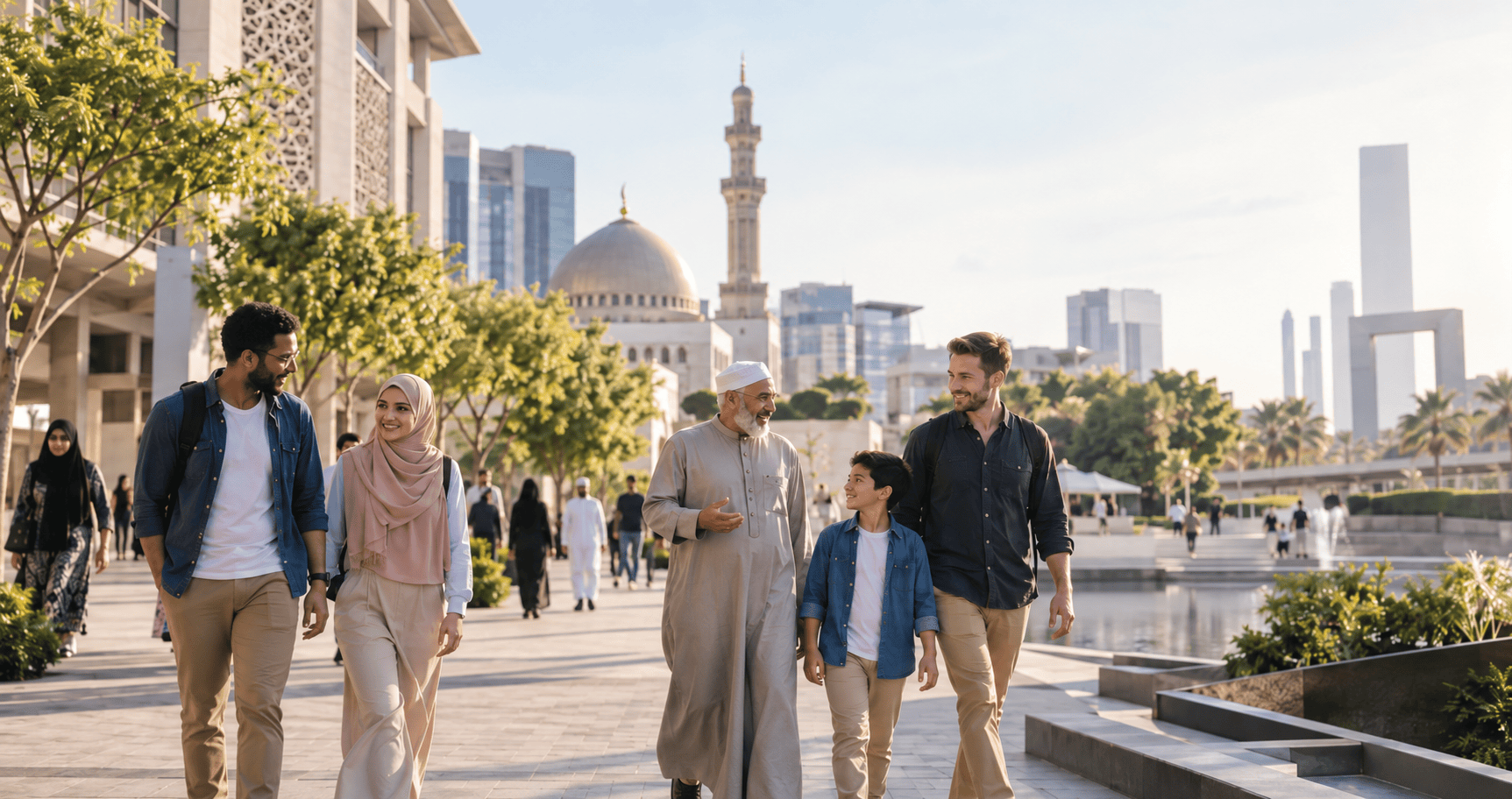
Moral, human and civilisation values
Moral, Human and Civilisational Values in Islam
I always ask myself, imagine if the Prophet ﷺ was here with us today. What would we say to him? Would we feel proud to be from his ummah, or shy of our shortcomings? Though I love him without a shadow of a doubt, I still have plenty of shortcomings.
Allah Almighty sent the Prophet Muhammad ﷺ as a mercy to the worlds:
وَمَا أَرْسَلْنَاكَ إِلَّا رَحْمَةً لِّلْعَالَمِينَ
“We have not sent you except as a mercy to the worlds.”
(Surah al-Anbiya, 21:107)
Our Master, the Prophet ﷺ was a manifestation of the mercy of Allah Almighty. It is clearly mentioned in this ayah. I want to share my thoughts on how the Prophet ﷺ saw those who did not believe. He always looked at people with mercy – not just the believers. Even those who did not believe in him, as he desperately wanted them to be saved and guided. Some people unfortunately pushed themselves away from the mercy of Allah, but the Prophet ﷺ was merciful even to his enemies. If you recall the incident at Ta’if, even after he was pelted with stones and was bleeding into his sandals, he did not seek revenge.
This mercy was not simply an emotion. It shaped the way he dealt with people and the way he delivered the message.
We see that He continued to call everyone to the divine message. He began with his family, then his tribe, his community and those around him. And let’s see from the other side – how did people perceive him? There were believers, disbelievers and hypocrites. The closest to him was his wife Khadija (may Allah be pleased with him).
One of the strongest testimonies of his character ﷺ came from Khadijah (may Allah be pleased with her). When he came home shaken after the first revelation, she reassured him:
كَلَّا وَاللَّهِ مَا يُخْزِيكَ اللَّهُ أَبَدًا، إِنَّكَ لَتَصِلُ الرَّحِمَ، وَتَحْمِلُ الْكَلَّ، وَتَكْسِبُ الْمَعْدُومَ، وَتَقْرِي الضَّيْفَ، وَتُعِينُ عَلَى نَوَائِبِ الْحَقِّ
“No, by Allah, Allah will never disgrace you. You maintain family ties, support those who are burdened, help the needy, honour your guests and assist people in times of hardship.”
(Sahih al-Bukhari)
This was before people had seen the years of his prophethood unfold. Khadijah knew him intimately and knew what sort of person he was. She believed in him. Yet, by contrast, Abu Lahab, his uncle, saw him as someone who had begun life as a poor orphan, and so out his arrogance, and envy, he opposed him with ferocity. How one sees things is how one reacts. And these different reactions to the Prophet ﷺ also show us something about the values he came to establish
When we look at the life and message of the Prophet ﷺ as a whole, these qualities can be understood through three broad principles.
Islam teaches us three pillars that reflect the mercy of Allah. The first pillar is human dignity. The second is tazkiya (purification) and the third is umran – the values of civilisation. These are embedded in the life of the Prophet ﷺ from Makkah to Madinah. You see the summary of these three pillars in his Farewell Sermon.
The first pillar – human dignity
One of the most important human values in Islam is dignity.
Allah Almighty says in the Quran:
وَلَقَدْ كَرَّمْنَا بَنِي آدَمَ
“Indeed, We have honoured the children of Adam.”
(Surah al-Isra, 17:70)
Allah has honoured every human being, regardless of race, colour, wealth or social position. We can see this clearly in the life of the Prophet ﷺ and in the community he established. Around him were people such as Bilal, Salman, Suhayb and Abu Bakr. They came from very different backgrounds, but the Prophet ﷺ established equality and justice among them. The Prophet ﷺ would heed their advice, as he did at the Battle of the Trench.
Human dignity therefore has to be reflected in the way we live and the way we treat others in every area of life.
The Prophet ﷺ taught us how our relationship with Allah should be, but he also taught us how our relationship with other people should be – he taught us how to deal with each other, with ourselves (not to overburden ourselves), how to deal with power and how to deal with the dunya and wealth. They are means that we use and which can be abused.
When we go to work if our intention is to seek halal provision then it is rewarding, but if it is just to accumulate wealth and status symbols then it fi sabil shaytan (the path of Shaytan)!
These principles applied not only to wealth and work, but also to the way people exercised power over others. The Prophet ﷺ also established rights for those who were vulnerable. In a society where slavery already existed, he taught people how those under their authority had to be treated. He instructed them to feed them from what they themselves ate and clothe them from what they themselves wore, and not to impose upon them what they could not bear.
أَطْعِمُوهُمْ مِمَّا تَأْكُلُونَ، وَأَلْبِسُوهُمْ مِمَّا تَلْبَسُونَ، وَلَا تُكَلِّفُوهُمْ مَا لَا يُطِيقُونَ
“Feed them from what you eat, clothe them from what you wear and do not burden them with what they cannot bear.”
This was teaching respect for human dignity. The person in front of you is a human being. Their life has value and dignity. But creating a society that respects human dignity requires more than external rules. It requires people whose hearts and character have also been transformed.
The second pillar – purifying the human being
But Islam does not only give us external rules. It wants to change the person from within. It zooms into character.
Allah Almighty describes the mission of the Prophet ﷺ:
وَيُعَلِّمُهُمُ الْكِتَابَ وَالْحِكْمَةَ وَيُزَكِّيهِمْ
“…and he teaches them the Book and wisdom and purifies them.”
This is tazkiyah: purification. We find this repeated in the Quran.
Allah says:
قَدْ أَفْلَحَ مَن زَكَّاهَا
“Successful indeed is the one who purifies it.”
(Surah al-Shams, 91:9)
And He says:
قَدْ أَفْلَحَ مَن تَزَكَّىٰ
“Successful indeed is the one who purifies himself.”
(Surah al-A‘la, 87:14)
So Islam is concerned with the purification of the human being: the heart, the intention and the character. Keeping the heart clear of envy and grudges. Because, Allah does not look at our appearance or our wealth. The Prophet ﷺ said:
إِنَّ اللَّهَ لَا يَنْظُرُ إِلَى صُوَرِكُمْ وَأَمْوَالِكُمْ، وَلَكِنْ يَنْظُرُ إِلَى قُلُوبِكُمْ وَأَعْمَالِكُمْ
“Allah does not look at your appearance or your wealth, but He looks at your hearts and your deeds.”
(Muslim)
Of course wealth matters. Allah will ask us how we earned it and how we spent it. But wealth itself is not what makes us valuable. What Allah looks at is the heart and the actions. This is why Allah mentions the sound heart:
إِلَّا مَنْ أَتَى اللَّهَ بِقَلْبٍ سَلِيمٍ
“…except the one who comes to Allah with a sound heart.”
(Surah al-Shu‘ara, 26:89)
So we need dhikr, istighfar, repentance and continuous work on the heart. The Prophet ﷺ taught the companions to do this. And when the heart is purified, its effect should appear in a person’s behaviour. This brings us naturally to moral character.
Moral values
From tazkiyah comes good character.
Allah praised the character of the Prophet ﷺ from day one:
وَإِنَّكَ لَعَلَىٰ خُلُقٍ عَظِيمٍ
“Indeed, you are truly of outstanding character.”
(Surah al-Qalam, 68:4)
The Prophet ﷺ embodied the best characteristics of all the prophets. He demonstrated truthfulness, trustworthiness, loyalty, patience, forbearance and gentleness. These are moral values. This is why he is referred to as the Sayid walidi Adam, the Master of the Children of Adam. This is why he said:
أَنَا سَيِّدُ وَلَدِ آدَمَ يَوْمَ الْقِيَامَةِ وَلَا فَخْرَ
“I am the master of the children of Adam on the Day of Judgement, and I say this without boasting.” (Muslim)
We need to learn from him kindness, gentleness, truthfulness, trustworthiness, patience, forbearance and loyalty. Gentleness is rifq and the Prophet ﷺ beautifully stated:
إِنَّ الرِّفْقَ لَا يَكُونُ فِي شَيْءٍ إِلَّا زَانَهُ، وَلَا يُنْزَعُ مِنْ شَيْءٍ إِلَّا شَانَهُ
“Gentleness is not present in anything except that it beautifies it, and it is not removed from anything except that it makes it ugly.”
(Muslim)
We need to learn how to be kind. Unfortunately, you cannot go to the pharmacy and ask them, “Can you give me some tablets of kindness?” You cannot ask for an injection of patience or gentleness. I wish we could. But we cannot. We have to learn these qualities. We have to train ourselves and work on our character. This is part of tazkiyah. However, Islam does not stop with the individual. A purified person with good character then has a responsibility to contribute to the world around them.
The third pillar is umran (civilisation values)
Then we come to another important value: umran. Allah created us from the earth and gave us the responsibility to cultivate it, develop it and build it. He appointed us as guardians of the earth.
Allah Almighty says:
هُوَ أَنشَأَكُم مِّنَ الْأَرْضِ وَاسْتَعْمَرَكُمْ فِيهَا
“He produced you from the earth and settled you upon it.”
(Surah Hud, 11:61)
So Islam is not only about purifying ourselves privately. We have a responsibility towards the world around us, not just to the environment, but to gain knowledge. We need to learn how to think. We need to learn the limits of the intellect and how to combine the intellect with the divine to find the truth.
We have to be productive and responsible in using the resources Allah gave us. We also need justice, order, and an ethical economy. Each one of these is a full course, but it gives us a hint of the values that the Prophet ﷺ implemented in his lifetime.
That is why the Islamic civilisation is unlike any other. It has dignity, purification, and productivity with responsibility. If you want a good civilisation, you need good people. If you want good people, you need to purify the heart and build good character. This is why tazkiyah and umran are connected. You purify the human being, and then that human being contributes positively to society.
These principles were not abstract ideas. The Prophet ﷺ established them throughout his life, and towards the end of his mission he brought many of them together in his Farewell Pilgrimage.
Protecting life, wealth and honour
We can see these values very clearly in the Farewell Pilgrimage of the Prophet ﷺ. Towards the end of his life, during Hajj, the Prophet ﷺ gave five famous sermons and confirmed many of the principles which he had been teaching throughout his mission. The most well known of these was on the Day of Arafah. In this speech, he confirmed:
- the sanctity of blood and life.
- the protection of wealth.
- the honour and reputation.
- the rights of women.
- the responsibilities of the community towards one another.
These were not new teachings introduced at the end of his life. They were a conclusion of what he had already established over many years in Makkah and Madinah. The Prophet ﷺ spent 23 years after the revelation building a community based on these values. However, even before he reached forty, he was active working – from being a shepherd to a businessman. However, the shift after revelation was about teaching inward and outward values. It was not theoretical but practical. He demonstrated by his own example, as he mentioned:
He said:
إِنَّ أَتْقَاكُمْ وَأَعْلَمَكُمْ بِاللَّهِ أَنَا
“Indeed, I am the most God-fearing among you and the most knowledgeable of Allah.”
In another well-known wording, the Prophet ﷺ said:
أَمَا وَاللَّهِ إِنِّي لَأَخْشَاكُمْ لِلَّهِ وَأَتْقَاكُمْ لَهُ
“By Allah, I am the one among you who fears Allah most and is most mindful of Him.”
His teaching therefore developed from building the individual to building the community, while the same values remained at its heart.
In Makkah, the Prophet ﷺ taught how to build character, In Madinah, he taught the companions how to build society and civilisation, through peace making, co-existence, dialogue and governance and international relations.
We should be the manifestation of the mercy of the Prophet ﷺ, through honouring human dignity, purification and being productive within society.
May Allah Almighty enable us to purify ourselves, improve our character, uphold human dignity and contribute positively to the societies in which we live. Ameen.
Talk delivered by Shaykh Haytham Tamim on 13th September 2026