
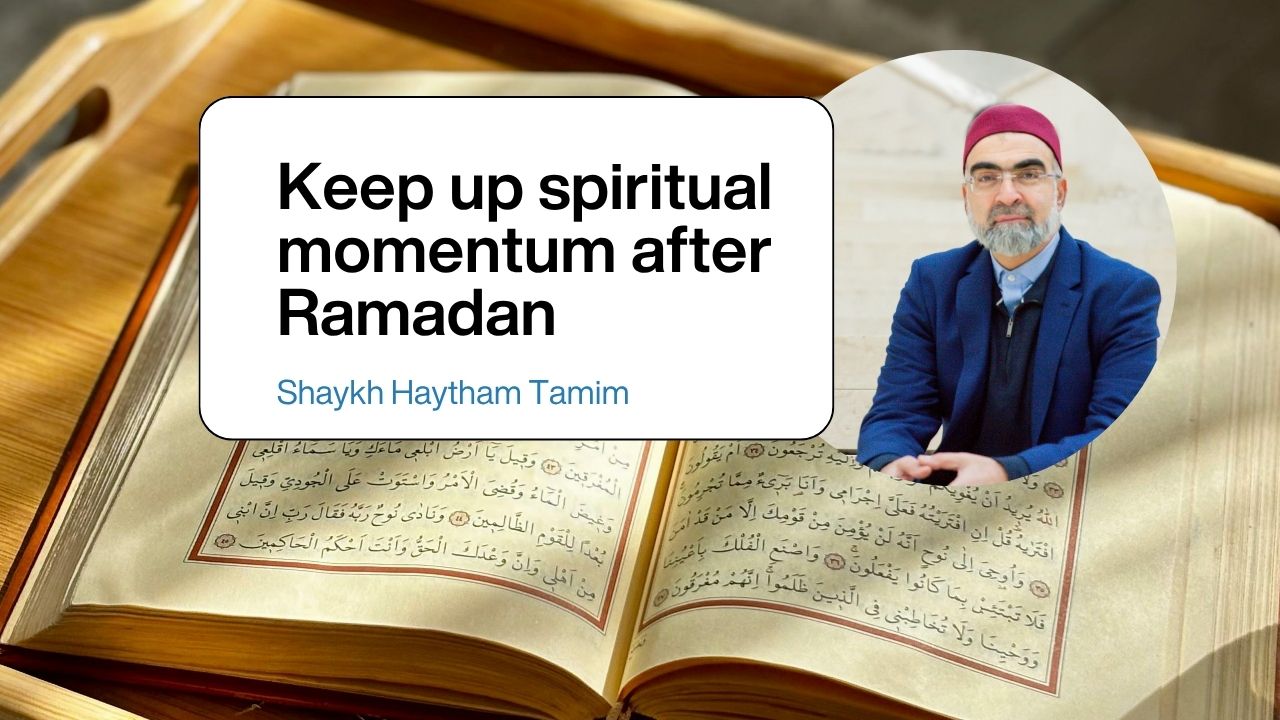
Deep lessons from 5 verses on fasting
Keeping momentum after Ramadan
Ramadan, as you know, is a very special month in our Islamic calendar. It comes once every year, but at different times and in different weather, as it moves through the seasons. Each time it returns, it gives us a new experience and a new taste of how to live Ramadan in our lives.
Understanding the pillar of fasting
If we want to talk about keeping momentum after Ramadan, we first need to understand this pillar itself. Fasting, siyam, is one of the major pillars of Islam. Depending on the narration, it is mentioned as the third or the fourth pillar. We know the five pillars of Islam: the shahadah is first, salah is second, then siyam, zakah, and hajj.
Without doubt, fasting is one of the great pillars of Islam. That is why the Prophet ﷺ mentioned it when he explained the pillars of the religion. Out of all the rulings, etiquettes, details and practices in Islam, he summarised Islam in these five pillars. So it is no small matter that siyam is one of them. It reflects the teaching and practice of Islam very deeply.
Fasting is a very important pillar. Most of us do it in Ramadan, but it is not restricted to Ramadan alone. We can fast outside Ramadan as well, though not as an obligation. The obligation is Ramadan. Outside Ramadan, fasting is recommended. It was also the regular practice of the Prophet ﷺ.
What makes it so important that it is among the top five? We delivered, some time ago, two retreats on the Seventy-seven Branches of Iman, and among those branches, siyam is one of the highest. Its reflection is great, and its impact is deep. So if we want to talk about how to keep momentum after Ramadan, we need first to understand the gravity and importance of this pillar.
It is beautiful when we go through the verses of siyam in the Qur’an, in Surat al-Baqarah, from verse 183 to verse 187. These five verses help us understand the reality of this pillar.
The Prophet ﷺ used to fast every Monday and Thursday throughout the year, as well as the thirteenth, fourteenth and fifteenth of every lunar month. This was his practice until he passed away. For twenty-three years of prophethood, fasting remained part of his life, and Ramadan became obligatory in the second year after the Hijrah. So in practice, the Prophet ﷺ fasted around eight Ramadans after it became obligatory.
Obedience, intentionality and self-awareness
Starting with verse 183, Allah is teaching us that the ultimate aim of fasting is taqwa:
يَا أَيُّهَا الَّذِينَ آمَنُوا كُتِبَ عَلَيْكُمُ الصِّيَامُ كَمَا كُتِبَ عَلَى الَّذِينَ مِنْ قَبْلِكُمْ لَعَلَّكُمْ تَتَّقُونَ
“O you who believe, fasting has been prescribed for you as it was prescribed for those before you, so that you may attain taqwa.” [2:183]
The aim of fasting is to become people of righteousness, people of taqwa. Taqwa, in one of the best definitions I have come across, means fulfilling the obligations and recommendations, while refraining from prohibitions and doubtful matters. So the aim of siyam is to help us become people of obedience, righteousness and connection to Allah.
When we reflect on this verse, we see that fasting is helping us, first, to gain control over our senses. When we fast, we control our whims and desires. We refrain from food, drink and intimacy during the day in Ramadan. So control is essential.
Second, fasting teaches observation. We begin to observe what we do, how we do it, with what intention we do it, and what we need to prepare for. This makes us people of obedience.
But obedience is not just robotic action. It is not merely doing something outwardly. It is about spirit, intention and attentiveness.
This is not limited to fasting. We need this in salah. We need it in our transactions. We need it in the way we deal with people. We need it in our conversations. We need attentiveness in everything.
So often, a deal breaks down or a relationship breaks down because attentiveness is lost. We stop taking care of one another. We stop listening to one another. We stop being present for each other.
So here Allah is teaching us how to acquire the best qualities, how to sharpen them if we have them, improve them, maintain them and preserve them.
Siyam creates these qualities within us. It brings them forward. It establishes them if they are weak, and improves them if they are already there. It is all about gaining control over our senses, our whims and our desires.
The moment we gain this control, our salah becomes different. Our relationships become different. Why? Because we begin to think before we speak. We watch where we look. We watch what we listen to. We watch what we say.
This is what Ramadan creates in us. This is what fasting creates in us. It develops observation.
And before all of this comes the intention in the heart. How do you begin your day? How do you begin your month? Do you begin with the right intention, that you are doing this for Allah’s sake? Or are you doing it just to tick a box, as an exercise, or to please people, or to satisfy your mother, your wife, your friends, or anyone else? It must be for Allah’s sake.
So the right intention must reside in the heart. Once we understand this, then when Ramadan finishes, these qualities should already feel like a second nature, because for thirty days we have trained ourselves to live with the right intention, observation and control.
أَيَّامًا مَعْدُودَاتٍ ۚ فَمَنْ كَانَ مِنْكُمْ مَرِيضًا أَوْ عَلَى سَفَرٍ فَعِدَّةٌ مِنْ أَيَّامٍ أُخَرَ ۚ وَعَلَى الَّذِينَ يُطِيقُونَهُ فِدْيَةٌ طَعَامُ مِسْكِينٍ ۖ فَمَنْ تَطَوَّعَ خَيْرًا فَهُوَ خَيْرٌ لَهُ ۚ وَأَنْ تَصُومُوا خَيْرٌ لَكُمْ إِنْ كُنْتُمْ تَعْلَمُونَ
For a limited number of days. So whoever among you is ill or on a journey, then let them fast the same number on other days. And upon those who are unable to fast is a ransom: feeding a poor person. And whoever volunteers extra good, it is better for them. And that you fast is better for you, if only you knew.
Then in verse 184, Allah speaks about the limited number of days that are obligatory to fast. It may be twenty-nine or it may be thirty. In the lunar calendar, there is no thirty-one. The month is either twenty-nine days or thirty.
Atomic habits
Again, there is psychological training here. Allah is teaching us not to look at fasting as an unbearable burden. He describes it as “a limited number of days”. This trains the mind not to think, “Thirty days is too much, I cannot do this.” Rather, Allah is teaching us to see it as manageable.
Ramadan teaches us that if a task is broken into smaller parts, then it can be carried. But if you try to carry the whole thing at once, you will fail. You do not fast thirty days in one day. You fast thirty days over thirty days. You do not fast one month in a single moment. You fast it one day at a time.
So Ramadan trains the mind to divide large tasks into smaller pieces. Carry small things, one by one, until you are able to carry more. If you try to carry too much all at once, you may drop it all.
In that same verse, the Qur’an also teaches us that there may be days when you cannot fast, or even a Ramadan in which you cannot fast. You may be ill. You may be travelling. You may be facing hardship. That is fine. Siyam is not meant to push you into hardship. It is not there to torture you. It is there to train you and elevate you, to make you a better person.
Self-improvement without being too self-critical
It is like the update you wait for on your phone or an app. You wait for version 1.4, or 1.5, or 2.3. Ramadan is like an update for the system. It improves your condition. It makes you a better version of yourself. One Ramadan takes you from one level to another, then the next Ramadan takes you further.
And while this update is happening, there may be bugs to fix, weaknesses to address, gaps to close. Ramadan comes and repairs these.
So Allah teaches us that if someone is ill or travelling, they can make up those days later. Even with such a great obligation and major pillar, Allah tells us that if you cannot do it now, you can complete it later.
This teaches us how to be relaxed. Do not take things negatively. If you cannot fast now, then with the right intention you can make it up on other days.
For those who cannot fast at all, because of severe illness or old age, there is compensation. For each missed day, they feed someone in need. The meal they would have eaten becomes a meal given to someone else.
Again, this shows flexibility within the seriousness of the task. Allah is teaching us to relax and to be flexible, within the boundaries of the Shariah.
This is something we need in life generally. Some people are so hard on themselves and on others. They cannot relax. They cannot take things with balance. They want everything done now and all at once. Unfortunately, that can lead to breakdown.
We need to relax, of course within the boundaries. I am not saying relax by stepping outside the limits. No. Relax within the limits.
Even in difficulty, Allah teaches us that worship can continue through alternatives. If you cannot worship Him through fasting, you may worship Him by helping someone else to eat. This too is worship. This too is devotion. So Ramadan teaches us alternatives and replacements within the Shariah.
Then Allah says beautifully, that to fast is better for you, if only you knew. In other words, do not make excuses when you are able. If you can fast, it is better for you. Allah is telling us that it is inwardly and outwardly good for us. Inwardly, it strengthens our spiritual connection. Outwardly, it benefits our system and our wellbeing.
Connect to the Qur’an
شَهْرُ رَمَضَانَ الَّذِي أُنْزِلَ فِيهِ الْقُرْآنُ هُدًى لِلنَّاسِ وَبَيِّنَاتٍ مِنَ الْهُدَى وَالْفُرْقَانِ ۚ فَمَنْ شَهِدَ مِنْكُمُ الشَّهْرَ فَلْيَصُمْهُ ۖ وَمَنْ كَانَ مَرِيضًا أَوْ عَلَى سَفَرٍ فَعِدَّةٌ مِنْ أَيَّامٍ أُخَرَ ۗ يُرِيدُ اللَّهُ بِكُمُ الْيُسْرَ وَلَا يُرِيدُ بِكُمُ الْعُسْرَ وَلِتُكْمِلُوا الْعِدَّةَ وَلِتُكَبِّرُوا اللَّهَ عَلَىٰ مَا هَدَاكُمْ وَلَعَلَّكُمْ تَشْكُرُونَ
The month of Ramadan is the one in which the Qur’an was sent down as guidance for mankind, and as clear proofs of guidance and criterion. So whoever among you witnesses the month, let them fast it. And whoever is ill or on a journey, then let them fast the same number on other days. Allah intends ease for you and does not intend hardship for you, so that you may complete the prescribed period, glorify Allah for having guided you, and so that you may be grateful.
Then in verse 185, Allah speaks about the sanctity of the month. Why is Ramadan so important? Because it is the month in which the revelation began. The beginning of the Qur’an was in Ramadan. That is why Ramadan is known as the month of the Qur’an.
Five things to observe when you read the Qur’an
This means we must connect ourselves to the word of Allah, not only by reciting it, but also by understanding it, reflecting on it, applying it and disseminating it. These are all part of our relationship with the Qur’an.
We should not leave this connection after Ramadan. The Qur’an is our livelihood. It is the word of Allah. For those who witness the month and are able, they should fast it, because it is better for them. Allah does not need our fasting or our worship, but we are the ones who need it. He is teaching us, “Follow My guidance, trust Me, and this will elevate you and make you better.”
Again, He reminds us that He wants ease for us, not complication, hardship or unnecessary difficulty. He wants us to worship Him with balance and ease.
Attain the station of gratitude
Then the verse closes with gratitude: so that you may be grateful.
Allah wants us, through this worship, to rise to a station of gratitude instead of living in a state of complaint. Too often, people keep picking at what is wrong. They keep focusing on what they do not have. But Allah is giving us lenses that magnify His favours, His grace and His blessings.
He is replacing the old lenses with new ones. The negative lenses are replaced with positive lenses. The lenses of complaint are replaced with the lenses of gratitude. He is teaching us how to see His blessings wherever we look.
A grateful servant becomes a different person. But a person who constantly complains becomes tired, and those around them become tired too. Grumpiness is contagious. Positivity is also contagious.
A grateful person brings goodness to those around them. A person of complaint and negativity spreads heaviness to those around them. So gratitude is one of the key lessons here.
Nearness to Allah
وَإِذَا سَأَلَكَ عِبَادِي عَنِّي فَإِنِّي قَرِيبٌ ۖ أُجِيبُ دَعْوَةَ الدَّاعِ إِذَا دَعَانِ ۖ فَلْيَسْتَجِيبُوا لِي وَلْيُؤْمِنُوا بِي لَعَلَّهُمْ يَرْشُدُونَ
And when My servants ask you concerning Me, indeed I am near. I answer the call of the caller when they call upon Me. So let them respond to Me and believe in Me, so that they may be rightly guided.
Then in verse 186, Allah mentions the special station of nearness:
“When My servants ask you about Me, indeed I am near.”
Allah wants us to feel this nearness. Not only in Ramadan, but throughout the year. Yet because Ramadan pushes us to make extra effort, we become more able to notice this nearness.
If we keep those extra efforts after Ramadan, we can remain connected to Allah and close to Him. Ramadan becomes a stepping stone towards nearness to Allah. It helps us get into shape for proximity to Him, during Ramadan and after Ramadan.
So this is how we carry the good qualities of Ramadan through the rest of the year.
We gain control and observation. We gain righteousness. We learn alternatives in worship. We experience ease. We draw close to Allah.
All of this, Allah is teaching us, can be lived in Ramadan and after Ramadan.
Then He ends the verse by mentioning guidance. When a person gets closer to Allah, Allah guides them. The more a person surrenders and obeys, the more guidance they receive. The more a person rebels, rejects and denies, the more they are left to themselves, and the more they may go astray. That is the formula.
أُحِلَّ لَكُمْ لَيْلَةَ الصِّيَامِ الرَّفَثُ إِلَىٰ نِسَائِكُمْ ۚ هُنَّ لِبَاسٌ لَكُمْ وَأَنْتُمْ لِبَاسٌ لَهُنَّ ۗ عَلِمَ اللَّهُ أَنَّكُمْ كُنْتُمْ تَخْتَانُونَ أَنْفُسَكُمْ فَتَابَ عَلَيْكُمْ وَعَفَا عَنْكُمْ ۖ فَالْآنَ بَاشِرُوهُنَّ وَابْتَغُوا مَا كَتَبَ اللَّهُ لَكُمْ ۚ وَكُلُوا وَاشْرَبُوا حَتَّىٰ يَتَبَيَّنَ لَكُمُ الْخَيْطُ الْأَبْيَضُ مِنَ الْخَيْطِ الْأَسْوَدِ مِنَ الْفَجْرِ ۖ ثُمَّ أَتِمُّوا الصِّيَامَ إِلَى اللَّيْلِ
It has been made lawful for you, on the nights of fasting, to be intimate with your wives. They are a garment for you and you are a garment for them. Allah knew that you were betraying yourselves, so He turned to you in mercy and pardoned you. So now be intimate with them and seek what Allah has decreed for you. And eat and drink until the white thread of dawn becomes distinct to you from the black thread, then complete the fast until the night.
Then in the final verse, verse 187, Allah speaks about the intimate relationship between husband and wife during the nights of Ramadan. During the day, it is prohibited. During the night, it is permitted.
Even this has been taken into account in Ramadan. At the beginning of the obligation, intimacy was prohibited during both the day and the night. Then Allah made it easier and allowed it during the night. So even here, Allah is teaching us ease. He is showing us how to make Him the main priority.
During the day, there is no food, no drink and no intimacy. Why? Because your focus is Allah. You are doing this for His sake.
So fasting trains not only the eyes, ears and tongue. It also trains the desires, teaching us control again. It teaches priority. How to make Allah your priority.
If you do this not only in Ramadan but throughout the year, you will see the difference. Make Allah your priority, and Allah will take care of you. He will facilitate what is good for you, according to His wisdom and according to the details of your situation.
So these are the verses of siyam. Allah is teaching us, through them, how to become close to Him. Control your desires. Make Allah your priority. Be a person of obedience. Be a person of gratitude. Be easy in your manner. Then you will see the change in your life.
For some people, this may feel difficult. But that is why there is training. Anything difficult at first becomes easier with training.
This is what we need to understand from these verses.
Ramadan trains us in hard tasks. It is one of those opportunities that pushes us into discipline. It is an obligation, so you do not really have a choice when you are able. And this training is important.
So many people keep postponing. They say, “I will go to the gym.” “I will cut down on sugar.” “I know I need to improve.” But they keep delaying.
The Qur’an teaches us how to enter training without endless procrastination. Ramadan comes and breaks that habit. You cannot keep delaying. The month arrives, and you fast. Then suddenly the month is over, and you realise you have done it.
Ramadan develops the best qualities, the best training and the best practice. The more we observe these meanings, the more control we gain, the more observation we develop, and the closer we become to Allah.
At the heart of it all is the right intention. Ramadan teaches us how to move away from what displeases Allah towards what pleases Him. It teaches us how to put into practice what we have learned.
Is it possible to keep this after Ramadan? Yes, it is.
Take a simple example. When you go for Umrah or Hajj, the feeling around the Ka‘bah is unique. It is not easy to match that feeling elsewhere. But if you carry the same intention into your salah at home, slowly and gradually you may begin to taste something of that closeness again.
Similarly, the atmosphere of Ramadan is special. It is blessed time. It is difficult to match exactly. But slowly, slowly, if you keep the same intention, you can carry its fruits forward.
Why does that feeling come? Because deep down your intention is to be closer to Allah and to become better in your worship, your salah, your transactions, your conversations, your relationships, and everything else in life.
When you truly want that, Allah will make it happen. But again, it all comes back to intention.
The beginning of every action needs the right intention.
And many times, may Allah forgive us, we begin with the right intention, then Shaytan comes during the action and tries to ruin it. So we end up with a different intention, and what we did becomes damaged.
That is why The Prophet ﷺ mentioned two beautiful hadiths.
The first is that actions are judged by intentions. If you have the right intention with the right practice, then your action will be accepted, in sha’ Allah.
Actions are according to intentions, and everyone will get what was intended. [Bukhari]
The second is that actions are judged by their endings.
“Verily, the deeds are only judged by their endings.” [Bukhari]
The end of the action matters greatly. You may begin well, but how did you finish? Did you end with the right intention as well?
The same applies to Ramadan. We may start Ramadan with the right intention, but did we finish it with the right intention? The same applies to salah, siyam, zakah, helping others and every other good deed.
So we need to start the action with the right intention and finish it with the right intention. We must monitor the heart, control it, and keep observing it.
If we do that, then in sha’ Allah we can keep the good momentum after Ramadan. We keep the good intention, the good practice and the good qualities that Ramadan taught us.
And the Lord of Ramadan whom we worship in Ramadan is also the Lord of the months after Ramadan. He is the Lord of the whole universe. He is worthy of worship in Ramadan and outside Ramadan.
So if Allah helped you become closer to Him in Ramadan, then He can also help you become closer to Him after Ramadan.
The final point I want to end on is a hadith qudsi. The Prophet ﷺ narrated that Allah says:
“I am as My servant thinks of Me.” [Bukhari]
So if you think Allah will support you, He will. If you think He will enable you to overcome your difficulties, He will. But if a person keeps thinking, “I am not sure Allah will help me,” then they weaken their own relationship with Him.
Always keep a good opinion of Allah. Have the right expectation of Allah. In sha’ Allah, He will draw us close to Him, accept us, and make us among the righteous whose worship and deeds He accepts for His sake. Ameen.
Based on the webinar delivered to Utrujj North by Shaykh Haytham Tamim on 9th April 2026.