
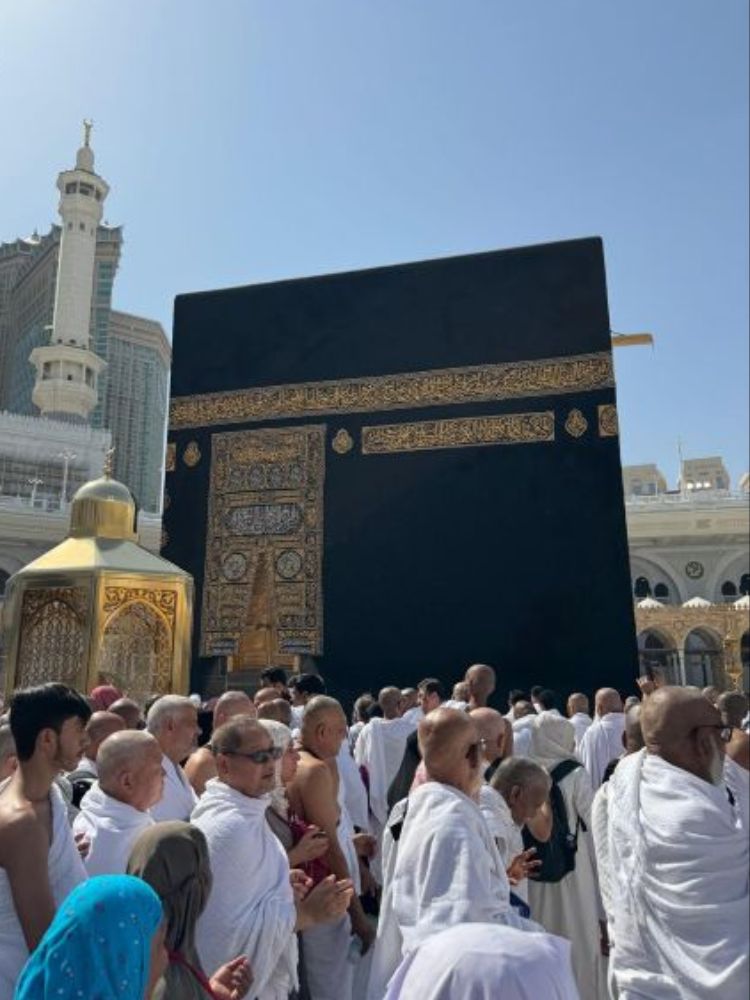
The inner meanings of Hajj and Umrah
Many people wonder why we perform the rituals of Hajj in the way that we do. We know that they were prescribed by the Prophet ﷺ, and that our worship is to follow what he taught us, exactly as he taught it. At the same time, scholars throughout Islamic history have reflected on the deeper meanings carried within these acts of worship. They explored how the outward actions of Hajj are tied to inner states of the heart and soul. Among those scholars was Mulla Ali al Qari (d.1014H), who wrote on the inner wisdom and significance of the pilgrimage. Here is a summary of his work, “Anwar al-Hujaj fi Asrar al-Hijaj” (Spiritual illuminations on the inner wisdoms of the Hajj rituals).
The meaning of Hajj
The word Hajj is made up of two letters. The letter ha signifies حلم الحق – the hilm (forbearance) of Al Haqq (Allah). While the letter jeem points to the جرم – sins of creation. The emphasis on the jim together with its dot alludes to the abundance and variety of human sins, and yet Allah forgives them despite their multitude.
In essence, it is out of Allah’s forbearance that He does not hasten to punish, and gives us Hajj as an opportunity for sins to be forgiven and purified, rather than for punishment to be brought upon us.
This reflects that mercy is Allah’s primary dealing with His creation, set before any manifestation of wrath.
The Messenger of Allah ﷺ said:
“When Allah completed the creation, He wrote a Book which is with Him above the Throne: ‘Indeed, My mercy has preceded My wrath.’ (Bukhari and Muslim)
This forgiveness, however, is tied to conditions. The pilgrimage must be accepted and the effort appreciated. That is, the journey must be undertaken with a sound intention, a purified inner resolve, complete abandonment of sin, detachment from worldly obsession, longing for the Hereafter, seeking the pleasure of the Lord, and sincerity in obedience, free from any concern for showing off or reputation.
Longing love and the call of Ibrahim
In essence, the driving force behind longing for Allah and love for Him, which draws people to His Sacred Sanctuary, is hope in His generosity and kindness, according to what Allah has decreed for each person in His decree and determination. It has been said that the cause of this longing and deep attachment is the supplication of Ibrahim (peace be upon him) when he said,
﴿رَّبَّنَآ إِنِّىٓ أَسْكَنتُ مِن ذُرِّيَّتِى بِوَادٍ غَيْرِ ذِى زَرْعٍ عِندَ بَيْتِكَ ٱلْمُحَرَّمِ رَبَّنَا لِيُقِيمُوا۟ ٱلصَّلَوٰةَ فَٱجْعَلْ أَفْـِٔدَةًۭ مِّنَ ٱلنَّاسِ تَهْوِىٓ إِلَيْهِمْ وَٱرْزُقْهُم مِّنَ ٱلثَّمَرَٰتِ لَعَلَّهُمْ يَشْكُرُونَ﴾
“Our Lord, I have settled some of my descendants in a valley with no cultivation near Your Sacred House, our Lord, so that they may establish prayer. So make the hearts of some people incline towards them, and provide them with fruits, that they may be grateful.” (Surat Ibrahim, 14:37)
A number of commentators explained this as meaning that hearts incline towards them, feel tenderness towards them, yearn for them, and remain attached to them. Had he said the hearts of all people, it would have included everyone. The use of the word hearts points to the fact that these are the chosen among creation and the finest of those seeking the truth. This is also indicated in the saying of Allah,
أَوَلَمْ نُمَكِّن لَّهُمْ حَرَمًا ءَامِنًا يُجْبَىٰٓ إِلَيْهِ ثَمَرَٰتُ كُلِّ شَىْءٍۢ رِّزْقًا مِّن لَّدُنَّا وَلَـٰكِنَّ أَكْثَرَهُمْ لَا يَعْلَمُونَ
“Have We not established for them a secure sanctuary to which are brought the fruits of all things as provision from Us? But most of them do not know.” (Surah al-Qasas, 28:57)
Seeking reward and divine pleasure
Pure longing for the reward and pleasure of Allah is in proportion to a persons understanding and realisation of Allah through witnessing His signs and evidences. Allah made His House a place of return for all people, a place of safety for the fearful, a refuge for those seeking protection, and a means of rescue for those fleeing to Him.
He placed within it realities testified to by those granted true witnessing, and He commanded His close friend to purify it for those devoted to worship and knowledge. He honoured it further by attributing it to Himself, saying,
وَإِذْ جَعَلْنَا ٱلْبَيْتَ مَثَابَةًۭ لِّلنَّاسِ وَأَمْنًۭا وَٱتَّخِذُوا۟ مِن مَّقَامِ إِبْرَٰهِيمَ مُصَلًّۭى ۖ وَعَهِدْنَآ إِلَىٰٓ إِبْرَٰهِيمَ وَإِسْمَـٰعِيلَ أَن طَهِّرَا بَيْتِىَ لِلطَّآئِفِينَ وَٱلْعَـٰكِفِينَ وَٱلرُّكَّعِ ٱلسُّجُودِ
“And when We made the House a place of return for the people and a place of security, and said: ‘Take the standing place of Abraham as a place of prayer.’ And We entrusted Abraham and Ishmael, saying: ‘Purify My House for those who circumambulate it, those who stay there for worship, and those who bow and prostrate.’”
Surah al-Baqarah (2:125)
My House: this alone is sufficient to grant it honour and distinction above all other lands.
Bearing hardship and turning fully to Allah
Anyone who seeks to step onto the threshold of kings and stand upon the carpet of their generosity in order to attain gifts and favour must endure hardship, show discipline, and observe proper conduct. If this effort is expected when seeking the attention or approval of a human king, then it is even more true and even more necessary for someone seeking closeness to Allah.
The pilgrim is required to turn to Allah completely in every situation, whether moving or at rest, letting go outwardly and inwardly of attachment to creation, and freeing himself from all restraints.
This means:
-
freeing the heart from attachments to people, wealth, status, and expectations
-
freeing the mind from being controlled by desires, fears, and constant distraction
-
freeing the soul from being tied to habits of sin, heedlessness, and self-importance
-
freeing oneself from relying on creation instead of relying on Allah
It means that whenever someone remembers a sin, they should turn back to Allah straight away and renew their repentance. Sin grows from forgetting Allah, while being saved from its effects requires firm faith and certainty, not hesitation or doubt.
The pilgrim lives between fear and hope at all times. He does not lose hope in Allah’s mercy, nor does he feel safe from Allah’s displeasure just because Allah is patient. He does not rely on his knowledge or his actions, but places his trust in the generosity and mercy of his Lord.
Sincerity and lawful provision
One of the most important things is to be sincere to Allah alone in everything. One of the most serious matters that needs care is how a person spends, making sure it comes from lawful sources, free from doubt, according to one’s means.
In Sahih Muslim, the Prophet ﷺ mentioned a man who travels far, is dusty and unkempt, and raises his hands to the sky saying, “O Lord, O Lord,” yet his food is unlawful, his drink is unlawful, his clothes are unlawful, and he has been nourished with what is unlawful. How, then, can his supplication be accepted?
Even strong duʿa and visible humility can be hindered if a person is careless about what is unlawful. Pure intention must be supported by lawful action, because what enters a person’s life and body affects the acceptance of their worship.
Gratitude and patience
In summary, the traveller on this path should be marked by gratitude and patience, and should not be unsettled by tightness of the chest or the irritation that accompanies it.
Crossing deserts or crossing the ego
One of the righteous said that he was astonished by the person who crosses long deserts to reach the House of Allah and His Sacred Sanctuary, seeing the signs of prophethood and the gifts of divine generosity, yet does not cross his own ego and desires out of love for Allah. If he were to do so, he would reach the heart itself and witness the light of his Lord and the hidden truths that lie within.
The outer journey and the inner journey
Intention
It is narrated that a man said to al Fudayl ibn Iyad, may Allah have mercy on him, I intend to travel to Mecca, so advise me. He replied, tighten your waist wrapper in seriousness, and look carefully to where you are going and to Whom you are going.
At the miqat
When the pilgrim reaches the miqat, he should remember that Allah has deemed him worthy of approaching Him, drawing near to Him, and standing before Him. He should therefore observe proper conduct so that he may be fit for divine reception and worthy of what is granted.
Removing stitched garments
When removing stitched clothing for ihram, he should remember being stripped for washing at death. When refraining from the prohibitions of ihram, he should intend complete renunciation of all that Allah has forbidden.
Ritual bathing (ghusl)
During the ritual bath, he should intend cleansing himself from sins and offences. Some of the righteous said, “Die before you die”, meaning let go of sin, ego, and attachment by choice before death comes without choice.
Wearing ihram perfuming and the prayer of ihram
When wearing the waist wrapper and cloak, he remembers being wrapped in his shroud. When applying perfume, he recalls the perfuming of the deceased. When praying the sunnah of ihram, he recalls the prayer that will one day be prayed over him.
Talbiyah
When uttering the talbiyah after correcting his intention and purifying his inner resolve, he remembers that he is responding to the call of Allah to His House, the place where the light of the Prophet ﷺ descended and where the secrets of revelation were placed. He stands between acceptance and rejection at a moment of great seriousness.
If he turns to Allah with his heart, Allah turns to him with generosity. If he turns away, Allah turns away from him in accordance with justice.
When hearing the pilgrims raising their voices in talbiyah, he should recall the scene of resurrection when people rise from their graves at the call.
The purpose of wearing ihram
The purpose of wearing the waist wrapper and cloak is humility, to seek the descent of Allah’s blessings and favours by abandoning comfort and familiarity. The servant is commanded to leave ease and luxury, and even expose his most honoured limbs to humility, so that whoever undresses for Allah in this world will be clothed with honour in the Hereafter.
Touching the black stone
When touching the Black Stone, he intends that he is renewing his pledge with Allah to remain firm upon obedience and faithful to the covenant.
Ramal and clinging to the covering of the Kabah
When performing ramal (walking briskly) during tawaf, he intends fleeing from his sins. When walking calmly, he hopes for safety from punishment through acceptance of repentance. When clinging to the coverings of the Kabah, he remembers the guilty clinging to the hems of the noble seeking pardon.
He guards all his limbs from wrongdoing during tawaf and retreat, out of respect for standing close to Allah.
Sa’i
During sa’i, he remembers the servant repeatedly moving within the courtyard of his Master, showing love, service, and hope for a merciful glance. Like one who enters the palace of a king and leaves unsure of acceptance, he returns again and again, hoping to be received.
Safa and Marwah become like the two pans of a scale, wavering between fear of the Fire and hope for forgiveness.
Standing at Arafah
When standing at Arafah, he remembers standing before Allah on the Day of Judgement among the entire ummah, surrounded by hardship and fear, awaiting a decree of Paradise or Hell. In the same way, the people of Arafah await either acceptance among the righteous or rejection among the sinful.
He reflects on the different states of people at Arafah, some riding, some walking, some weak, just as on the Day of Resurrection people will be raised according to their deeds and ranks. He remains between fear and hope in every state.
As he waits for sunset and the departure from Arafah, he remembers creation waiting for judgement through the intercession of the Master of the Prophets ﷺ.
Muzdalifah
One of the early righteous said, I was at Muzdalifah spending the night in worship when I saw a woman praying until dawn alongside an elderly man. I heard him supplicating,
O Allah, we have come from where You know, we have performed the pilgrimage as You commanded, and we have stood as You guided us. We have seen that in this world, when a servant grows old in service, people dislike to sell him. We have grown old in Your dominion, so have mercy on us through Your gentleness and free us through Your generosity.
Based on a concise translation of “Anwar al-Ḥujaj fi Asrar al-Hijaj” by Mulla ʿAli al-Qari (may Allah have mercy on him)
Summarised by Shaykh Haytham Tamim 18th December 2025
Mulla ʿAli al-Qari was a renowned Hanafi scholar of Makkah, originally from Herat, known for his mastery of hadith, fiqh, tafsir, and theology, and for authoring numerous influential works that combined rigorous scholarship with spiritual insight.